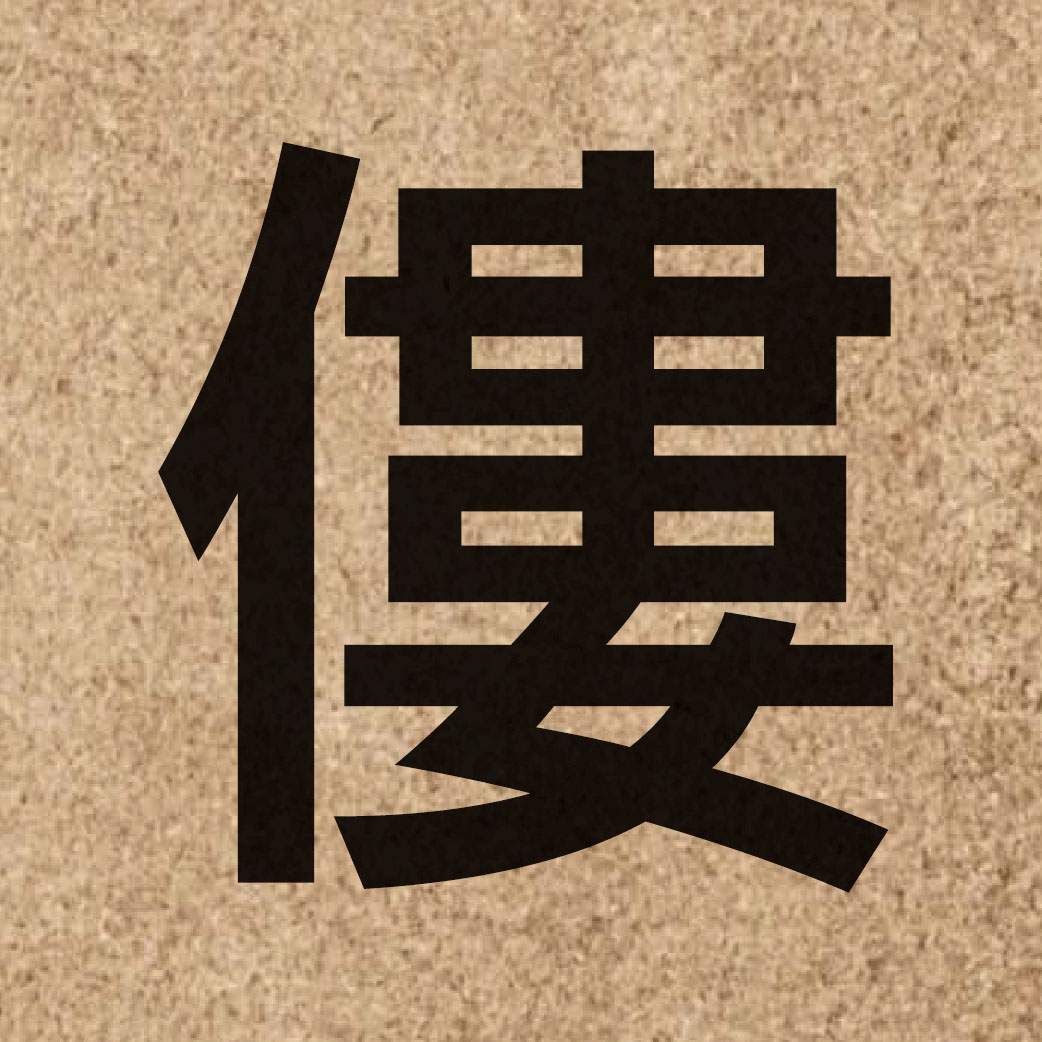
The Chinese word【僂】that we will introduce this time is a word that describes body posture or symptoms. It is mainly used for the following meanings:
Bent over, hunched over.
You’ll find the pronunciation for this Chinese character here.
Mandarin Pinyin of 【僂】:lóu
Cantonese Jyutping of 【僂】:leoi5
This section presents general background information on the Chinese character 【僂】︰
Here are some situations where you can use【僂】, for example:Describing body posture or symptoms , It mainly means stooped, hunched over. .Chinese characters encompass a wide spectrum of meanings, with intricate interpretations that may not be thoroughly described in this context.
【僂】exists independently, yet its interaction with other words enriches expressions, such as【僂背、僂人】(Mandarin Pinyin:lǚ bèi 、lǚ rén/ Cantonese Jyutping:lau4 bui3 、lau4 jan4)
It takes 13 strokes to write this character,Its usage is more restrictive, making it an advanced-level Chinese character that one only needs to learn when seeking to challenge their own abilities,Provided below is a sentence illustrating this character in context.:
老人的僂背顯得格外辛苦。
The old man’s hunched back looked particularly tired.
May you grow to love the nuances of Chinese while enriching your understanding through learning. Feel free to go through the available information slowly.