
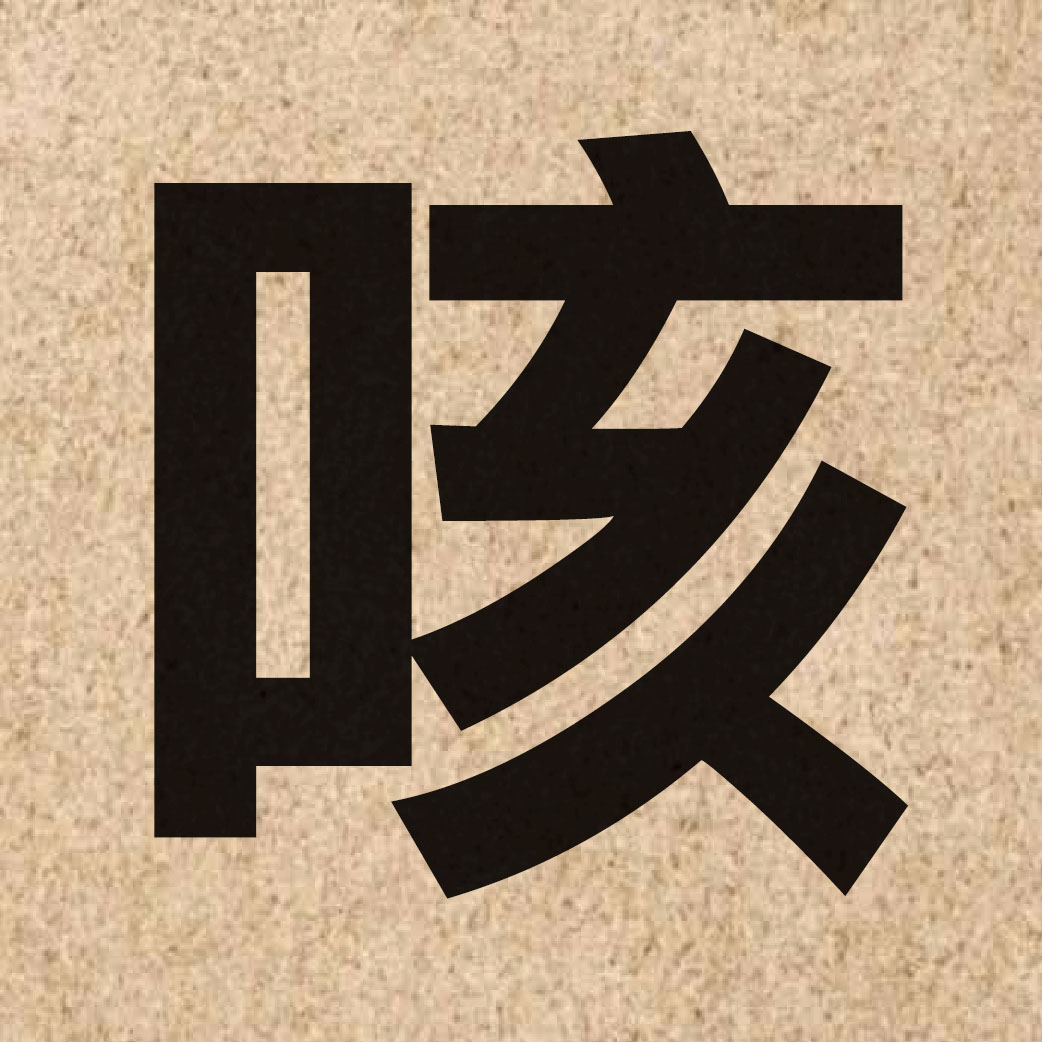
The Chinese character【咳】is a word that describes actions or health, and is mainly used for the following meanings:
Cough or sound. Explanation: 1. (1) Cough: The sound of the tracheal mucosa being irritated and forcing out air. (2) Use air to remove foreign objects from the throat. Such as: “coughing up blood” and “coughing up phlegm”. 2. (1) Sigh. For example: “coughing and sighing”. (2) Interjection. A tone expressing regret or remorse. For example: “Oh! That’s terrible!” (3) Interjection. Expressing the tone of greeting. For example: “Ah! Everyone, please gather here.”
Below, you can see how this Chinese character is pronounced.
Mandarin Pinyin of 【咳】:hāi
Cantonese Jyutping of 【咳】:kat1
Here is an explanation of the primary details of the Chinese character 【咳】︰
Here are some situations where you can use【咳】, for example:Describes action or health , It means mainly a cough or sound .Since Chinese characters carry vast meanings, some subtle aspects and specific applications might not be fully detailed in this explanation.
【咳】stands alone as a word, yet when paired with others, it leads to complex linguistic structures, for instance【咳嗽、咳聲】(Mandarin Pinyin:ké sòu 、ké shēng/ Cantonese Jyutping:kat1 sau2 、kat1 seng1)
Writing this character requires 9 strokes,It is a Chinese character that, once mastered, allows for a deeper understanding and more diverse expression in communication,Here’s a sample sentence featuring this character.:
孩子因感冒一直在咳嗽。
The child has been coughing due to a cold.
Hoping that you’ll immerse yourself in the wonders of Chinese and gain meaningful knowledge here. There’s plenty to see, so explore at your convenience.
