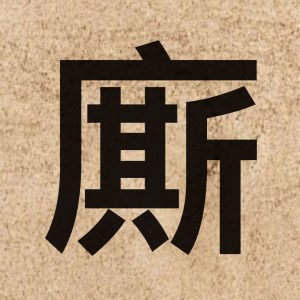
The Chinese character【姬】is used to describe a person’s name or culture, and is mainly used for the following meanings:
Ancient female surname. Explanation: (1) A compliment for women in ancient times. Such as: “Meiji”, “Yuji”, “Ji Jiang”. (2) A general term for concubines in ancient times. Such as: “maid concubine”, “favored concubine”, “concubine”. (3) An old term for women who perform singing and dancing. Such as: “singer”, “dancer”.
Here’s the way to say this Chinese character aloud.
Mandarin Pinyin of 【姬】:jī
Cantonese Jyutping of 【姬】:gei1
This section presents general background information on the Chinese character 【姬】︰
Here are some situations where you can use【姬】, for example:Describing a person or culture , It mainly means ancient women, surnames .With the depth and complexity of Chinese characters, some refined meanings and specific usages might not be entirely expressed here.
【姬】exists independently, yet its interaction with other words enriches expressions, such as【姬姓、姬妾】(Mandarin Pinyin:jī xìng 、jī qiè/ Cantonese Jyutping:gei1 sing3 、gei1 cip3)
It takes 10 strokes to write this character,It is a Chinese character that, once mastered, allows for a deeper understanding and more diverse expression in communication,Here’s a sample sentence featuring this character.:
姬姓是中國古代的主要姓氏之一。
Ji is one of the main surnames in ancient China.
I wish for you to embrace the charm of Chinese and acquire greater knowledge along the way. Take a moment to explore the details provided.