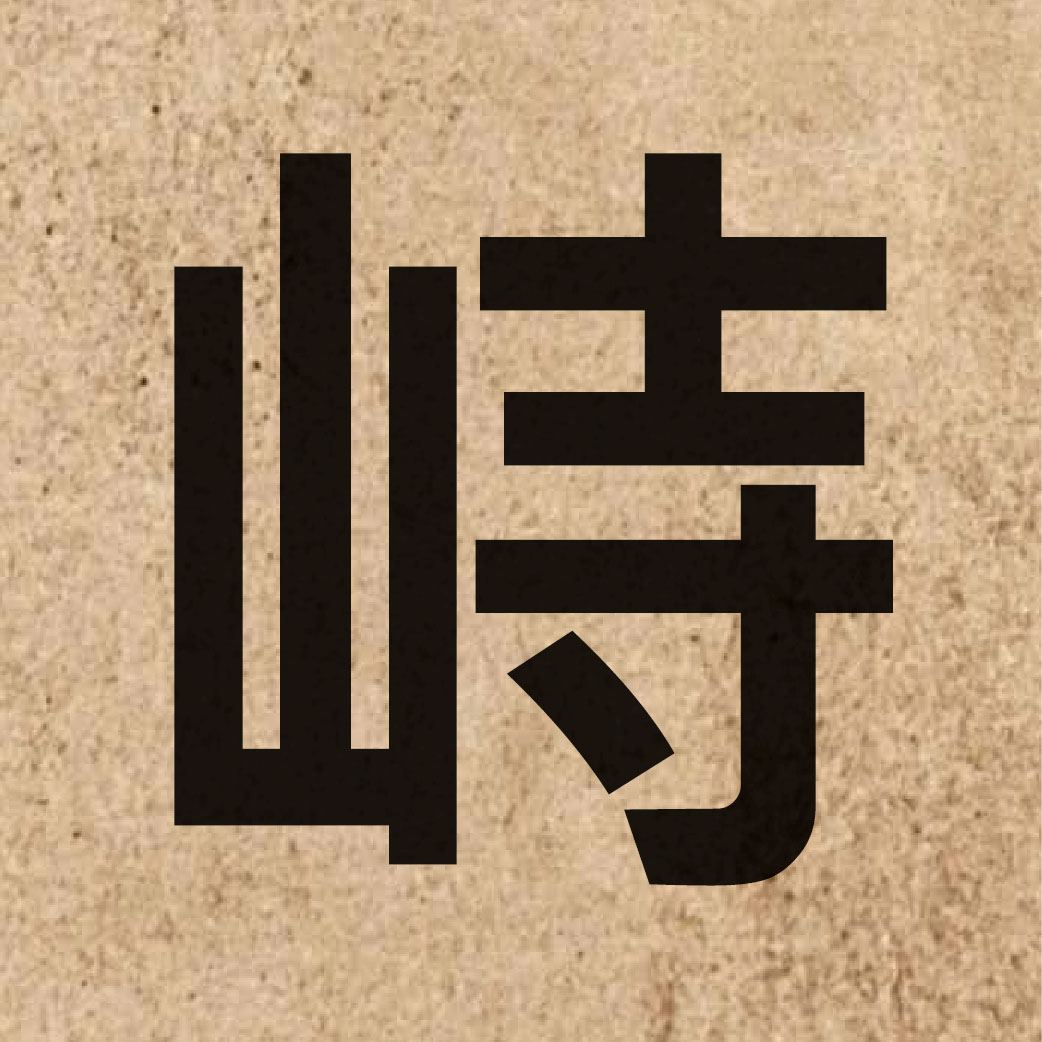
The Chinese character【峙】is used to describe terrain or status, and is mainly used for the following meanings:
Confront or stand. Explanation: (1) The appearance of a towering mountain. Such as: “towering”, “standing tall”. (2) Opposite. Such as: “confrontation”.
Here is the phonetic guide for pronouncing this Chinese character.
Mandarin Pinyin of 【峙】:zhì
Cantonese Jyutping of 【峙】:zi6
This section covers the key information related to the character 【峙】︰
Here are some situations where you can use【峙】, for example:Describe the terrain or state , It means mainly to stand in opposition or to stand .The richness of Chinese characters allows for a wide range of meanings, some of which may be too complex to be fully explained here.
【峙】can be used alone, but when combined with other words, it forms richer expressions, such as【對峙、矗峙】(Mandarin Pinyin:duì zhì 、chù zhì/ Cantonese Jyutping:deoi3 ci5 、cuk1 ci5)
There are exactly 9 strokes in this character,It is a Chinese character that must be learned by those aiming to reach a near-native level of proficiency in Chinese,Listed below is a sentence demonstrating the application of this character.:
兩座山峰在河兩岸對峙而立。
Two mountain peaks stand opposite each other on both sides of the river.
Wishing you a wonderful journey in embracing Chinese and expanding your knowledge. There’s more information for you to explore leisurely.