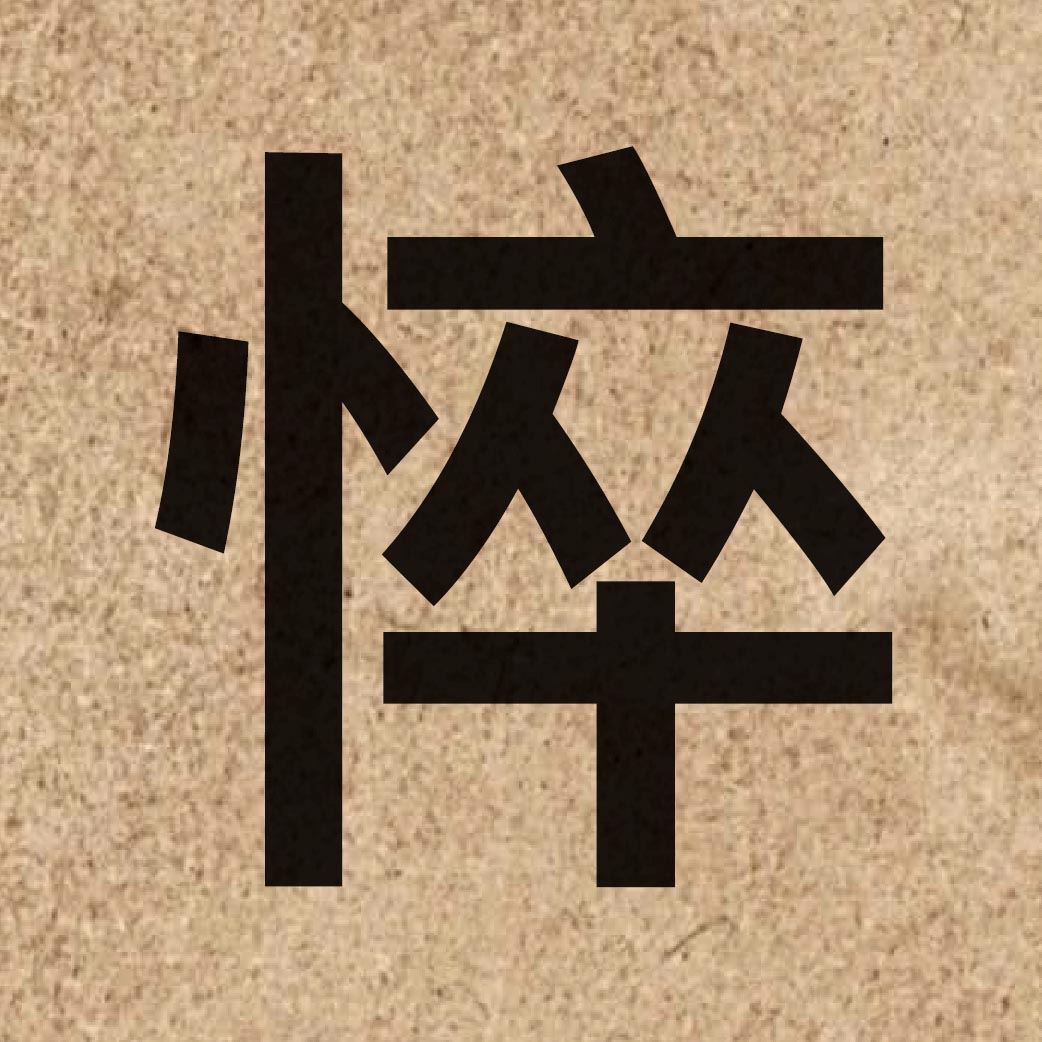
The Chinese character【悴】is a word that describes a state or image, and is mainly used for the following meanings:
Haggard or tired.
This is how you pronounce the given Chinese character.
Mandarin Pinyin of 【悴】:cuì
Cantonese Jyutping of 【悴】:seoi6
Below is a description of the essential features of the character 【悴】︰
Here are some situations where you can use【悴】, for example:Describe a state or image , It means mainly haggard or tired.Given the broad interpretative scope of Chinese characters, certain deeper meanings and unique applications may be beyond this explanation.
【悴】is an individual word whose meaning expands when incorporated into combinations, such as【憔悴、形悴】(Mandarin Pinyin:qiáo cuì 、xíng cuì/ Cantonese Jyutping:ciu4 seoi5 、jing4 seoi5)
This character is composed using 11 strokes,Its usage is more restrictive, making it an advanced-level Chinese character that one only needs to learn when seeking to challenge their own abilities,Here’s an example showing how this character can be effectively used.:
他因長期操勞而顯得憔悴。
He looked haggard from long-term work.
I hope you enjoy the richness of the Chinese language and gain new insights while browsing. Take your time to explore the details.