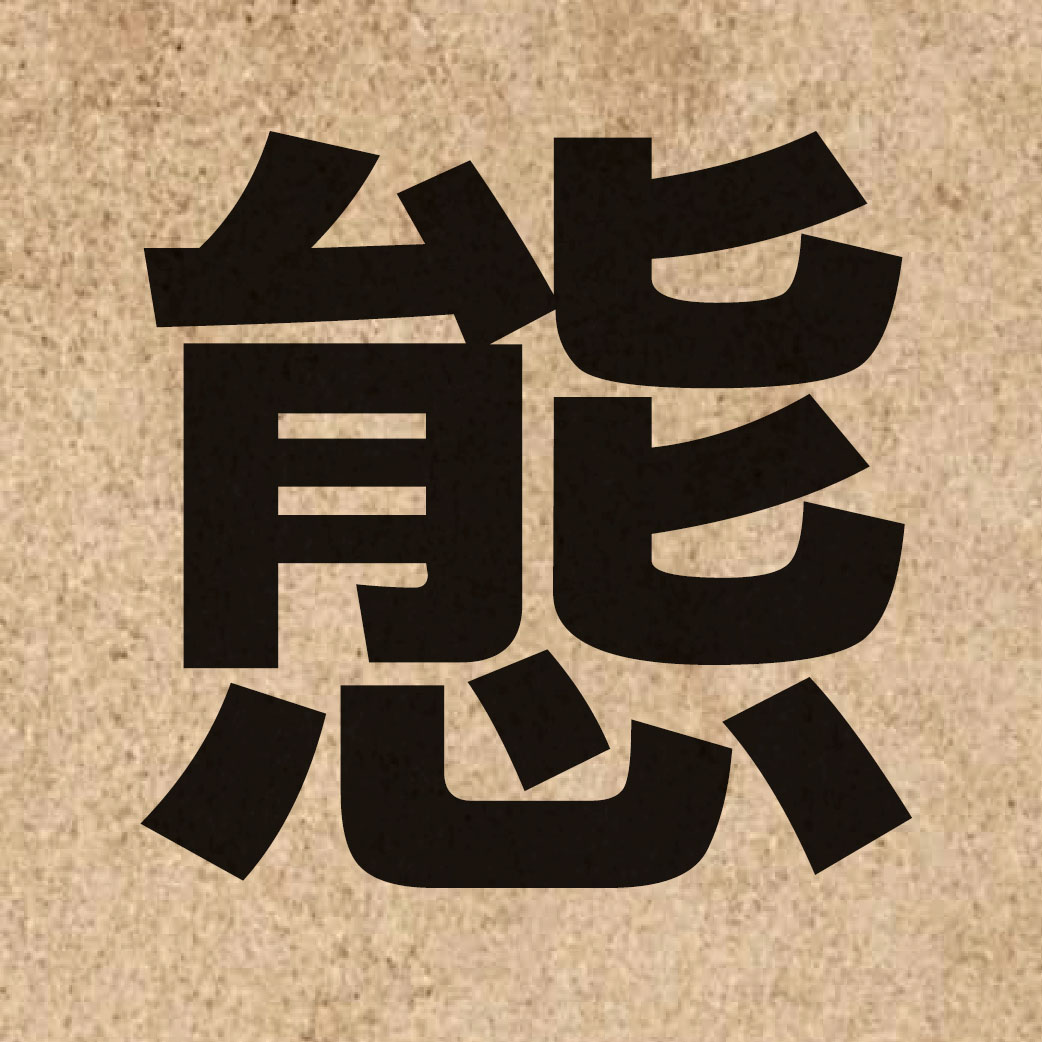
The Chinese word【態】is used to describe emotions or behaviors, and is mainly used to mean the following:
state or attitude. Explanation: (1) The outward appearance or form of something. Such as: “posture”, “state”, “liquid state”, “condition”. (2) Attitude: A>behavior and expression. For example: “friendly attitude”, “calm attitude”. B>Views and opinions. Such as: “show attitude”, “take a tough attitude”.
Below, you can see how this Chinese character is pronounced.
Mandarin Pinyin of 【態】:tài
Cantonese Jyutping of 【態】:taai3
Below is an introduction to the basics of the Chinese character 【態】︰
Here are some situations where you can use【態】, for example:Describing emotions or behaviors , It means primarily a state or attitude. .The depth of meaning in Chinese characters encompasses intricate interpretations, some of which may be difficult to fully articulate here.
【態】functions as a standalone word but can pair with others to form more descriptive expressions, like【態度、狀態】(Mandarin Pinyin:tài dù 、zhuàng tài/ Cantonese Jyutping:taai3 dou6 、zong6 taai3)
The stroke count for this character is 14 ,It is a highly common and fundamental Chinese character that must be learned,Here’s a sample sentence featuring this character.:
她以友善的態度接待了客人。
She received the guests in a friendly manner.
May you appreciate the elegance of Chinese and grow in understanding through learning. Feel free to navigate through the materials leisurely.