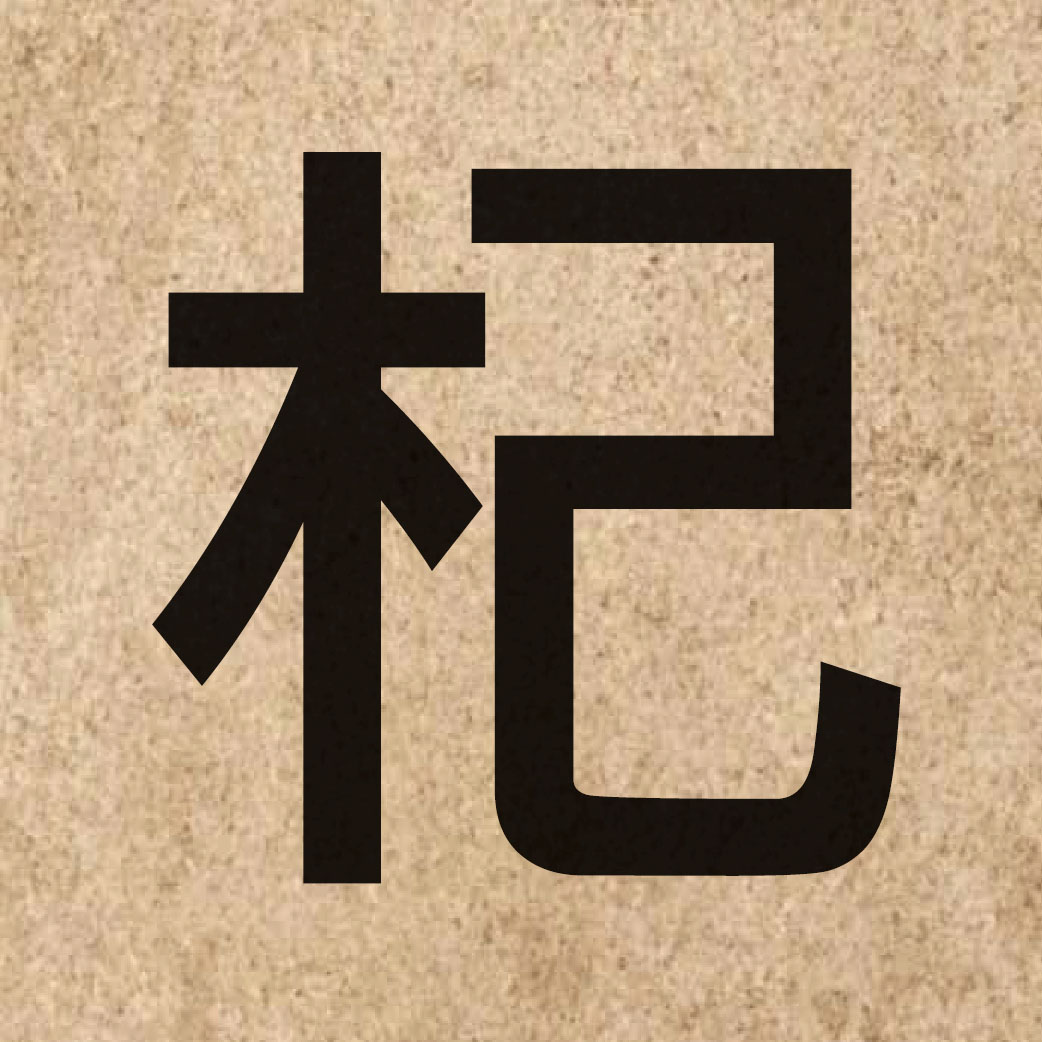
The Chinese word【杞】that we will introduce this time is a word that describes a place name or culture. It is mainly used for the following meanings:
Qi state or plant. Explanation: Wolfberry: deciduous shrub. The leaves are oblong and the flowers are lavender. The fruit is an oblong red berry with a sweet taste. It can be used as medicine and has the function of improving eyesight and nourishing the body. The root bark, branches and leaves can also be used as medicine, with antipyretic and anti-inflammatory functions. For example: “My sister often drinks wolfberries mixed with hot water to protect her eyes.”
Here is the pronunciation of this Chinese character.
Mandarin Pinyin of 【杞】:qǐ
Cantonese Jyutping of 【杞】:gei2
Below, you’ll find general facts about the Chinese character 【杞】︰
Here are some situations where you can use【杞】, for example:Describing a place name or culture , It means mainly Qi or plant .Due to the depth of Chinese characters, certain intricate meanings and specialized applications might not be entirely expressed in this context.
【杞】is a word that, when joined with additional words, constructs more precise phrases, like【杞憂、枸杞】(Mandarin Pinyin:qǐ yōu 、gǒu qǐ/ Cantonese Jyutping:gei2 jau1 、gau2 gei2)
To form this character, you need 7 strokes,Its usage is more restrictive, making it an advanced-level Chinese character that one only needs to learn when seeking to challenge their own abilities,Provided below is a sentence illustrating this character in context.:
杞憂常用來描述過度擔心的狀態。
Qiyou is often used to describe a state of excessive worry.
May you discover the joy of learning Chinese and deepen your understanding along the way. Feel free to browse through the details at your own pace.