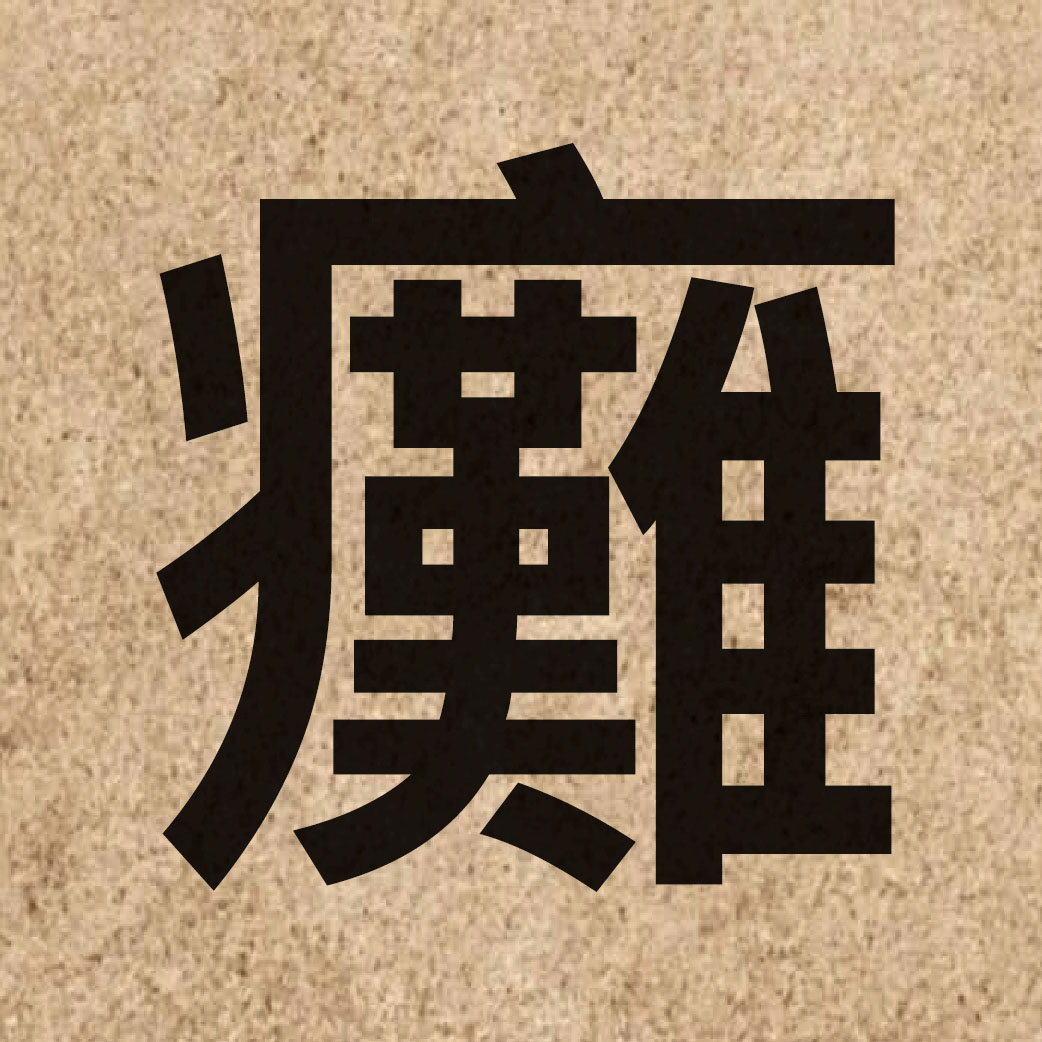
The Chinese character【癱】that we will explain today is a word that describes health or status. It is mainly used for the following meanings:
Paralysis or weakness. Explanation: (1) The phenomenon of paralysis and weakness of limbs. For example: “Paralysis”. (2)Looking very tired. For example: “He was so tired that he collapsed on the sofa and couldn’t move.”
This section provides the pronunciation of the Chinese character.
Mandarin Pinyin of 【癱】:tān
Cantonese Jyutping of 【癱】:taan1/taan2
This introduces some basic knowledge regarding the Chinese character 【癱】︰
Here are some situations where you can use【癱】, for example:Describe health or condition , It means mainly paralysis or weakness .Given the broad and profound nature of Chinese characters, some nuances and precise usages may not be entirely captured in this space.
【癱】serves as a standalone word but gains depth when partnered with others to form detailed expressions, like【癱瘓、癱坐】(Mandarin Pinyin:tān huàn 、tān zuò/ Cantonese Jyutping:taan1 wun6 、taan1 co5)
The total stroke number of this character is 24 ,It is a Chinese character that must be learned by those aiming to reach a near-native level of proficiency in Chinese,This example sentence will help clarify the usage of this character.:
他因疲憊不堪癱坐在沙發上。
He slumped on the sofa due to exhaustion.
I hope you find delight in the richness of the Chinese language and learn new things here. Take your time going through the materials provided.