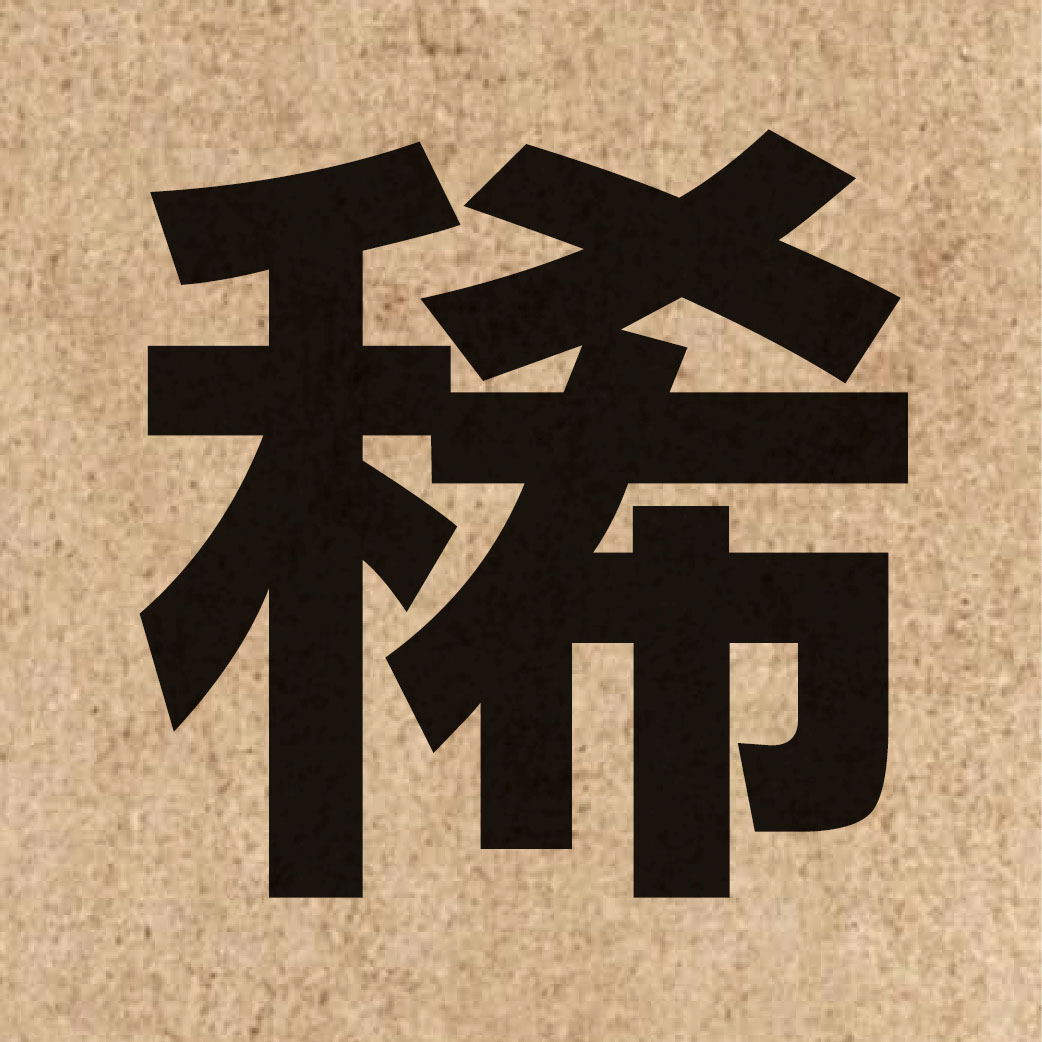
The Chinese character【稀】is used to describe quantity or density, and is mainly used for the following meanings:
Rare and sparse. Explanation: (1) Few, not much. Such as: “rare”, “unusual”, “strange”, “scarce”, “rare treasure”. (2) Not thick or dense. Such as: “porridge”, “thin”, “diluted”, “sparse”. (3) Extremely or severely. For example: “My legs are still so weak that I can’t stand up.”
This is how you pronounce the given Chinese character.
Mandarin Pinyin of 【稀】:xī
Cantonese Jyutping of 【稀】:hei1
This introduces some basic knowledge regarding the Chinese character 【稀】︰
Here are some situations where you can use【稀】, for example:Describe quantity or density , It means mainly rare and sparse. .The richness of Chinese characters allows for a wide range of meanings, some of which may be too complex to be fully explained here.
【稀】serves as a standalone word but gains depth when partnered with others to form detailed expressions, like【稀少、稀疏】(Mandarin Pinyin:xī shǎo 、xī shū/ Cantonese Jyutping:hei1 siu2 、hei1 so1)
The total stroke number of this character is 12 ,It is a more advanced Chinese character that is essential for daily use,Here’s an example showing how this character can be effectively used.:
這片森林的樹木非常稀疏。
The trees in this forest are very sparse.
Wishing you a wonderful journey in embracing Chinese and expanding your knowledge. There’s more information for you to explore leisurely.