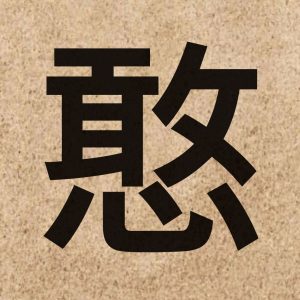
The Chinese character【羞】is a word that describes emotions or states, and is mainly used for the following meanings:
Shame or shyness. Explanation: (1) Feeling ashamed or humiliated. Such as: “shame”, “disgrace”, “angry out of shame”, “his unscrupulous behavior makes everyone ashamed to be associated with him.” (2) Feel embarrassed. Such as: “shy”, “blushing”, “shameful”, “timid”. (3) Delicious food. Same as “覐”. Such as: “precious delicacy” and “occasional delicacy”. (4) To insult or embarrass someone. Such as: “humiliation”. (5) Shame. Such as: “shame”, “cover up shame”.
Here is the phonetic guide for pronouncing this Chinese character.
Mandarin Pinyin of 【羞】:xiū
Cantonese Jyutping of 【羞】:sau1
Below, I will share fundamental aspects of the meaning and usage of the character 【羞】︰
Here are some situations where you can use【羞】, for example:Describing a feeling or state , It means mainly shame or shyness .The elaborate meanings of Chinese characters allow for specialized applications that might not be fully expressed here.
【羞】is a simple word when used alone, but its meaning broadens when combined with others to form intricate phrases, like【害羞、羞恥】(Mandarin Pinyin:hài xiū 、xiū chǐ/ Cantonese Jyutping:hoi6 sau1 、sau1 ci2)
To complete this character, you need 11 strokes,It is a Chinese character that, once mastered, allows for a deeper understanding and more diverse expression in communication,Here’s a sample sentence featuring this character.:
她因被表揚而害羞地低下頭。
She lowered her head in shyness at being praised.
May you enjoy the charm of Chinese and develop a broader perspective through learning. You can go through the materials whenever you’d like.