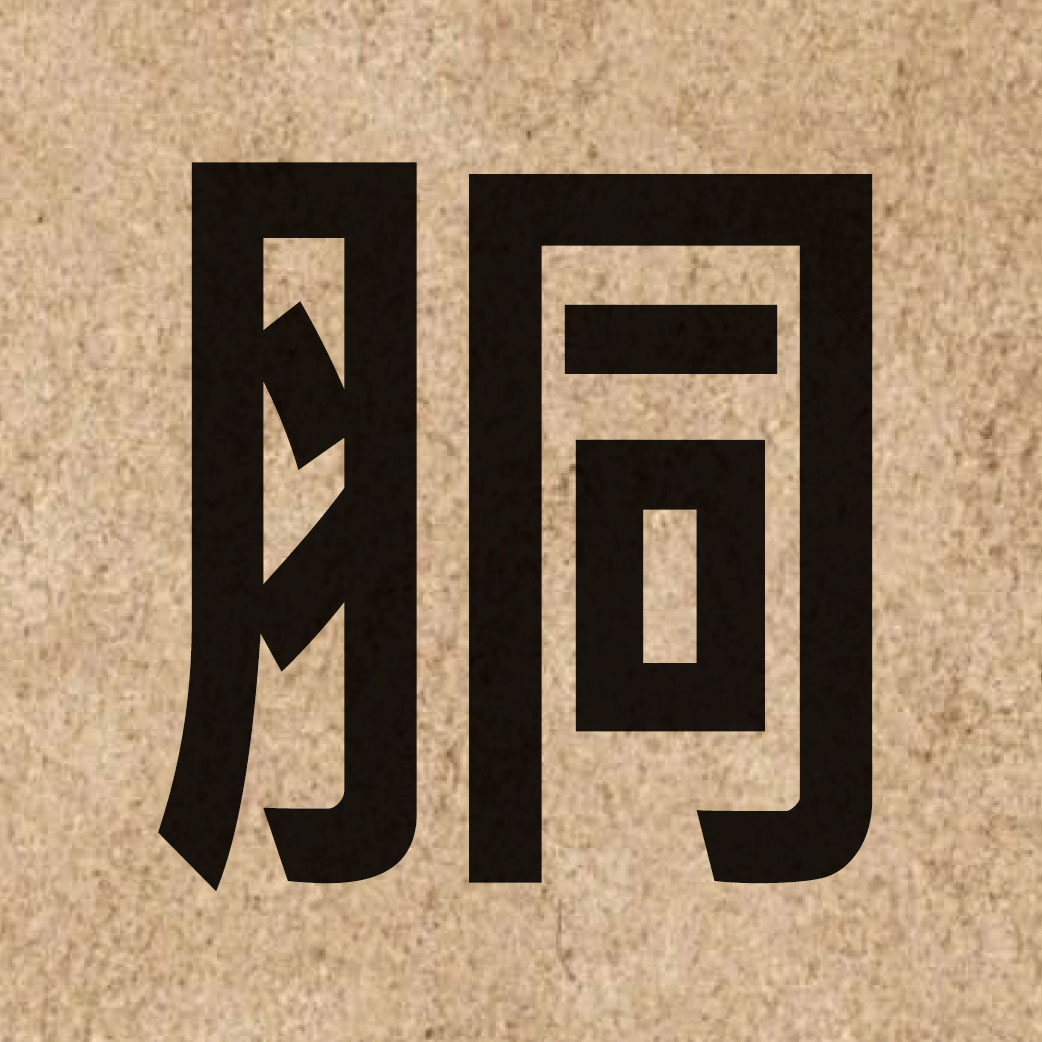
The Chinese character【胴】that I will teach you today is a word that describes physiology or morphology. It is mainly used for the following meanings:
body or skin.
This is how you pronounce the given Chinese character.
Mandarin Pinyin of 【胴】:dòng
Cantonese Jyutping of 【胴】:dung6
This provides fundamental insights into the meaning of the character 【胴】︰
Here are some situations where you can use【胴】, for example:Describe physiology or morphology , It means mainly the body or skin .Given the broad interpretative scope of Chinese characters, certain deeper meanings and unique applications may be beyond this explanation.
【胴】appears simple on its own, but when linked to other words, it creates nuanced phrases, like【胴體、裸胴】(Mandarin Pinyin:dòng tǐ 、luǒ dòng/ Cantonese Jyutping:dung6 tai2 、lo2 dung6)
This character consists of 10 individual strokes,It is an obscure Chinese character that may only be found in ancient texts,This sentence serves as an example of how to use this character.:
畫作展現了人物的胴體美。
The painting shows the beauty of the figure’s body.
I hope you enjoy the richness of the Chinese language and gain new insights while browsing. Take your time to explore the details.