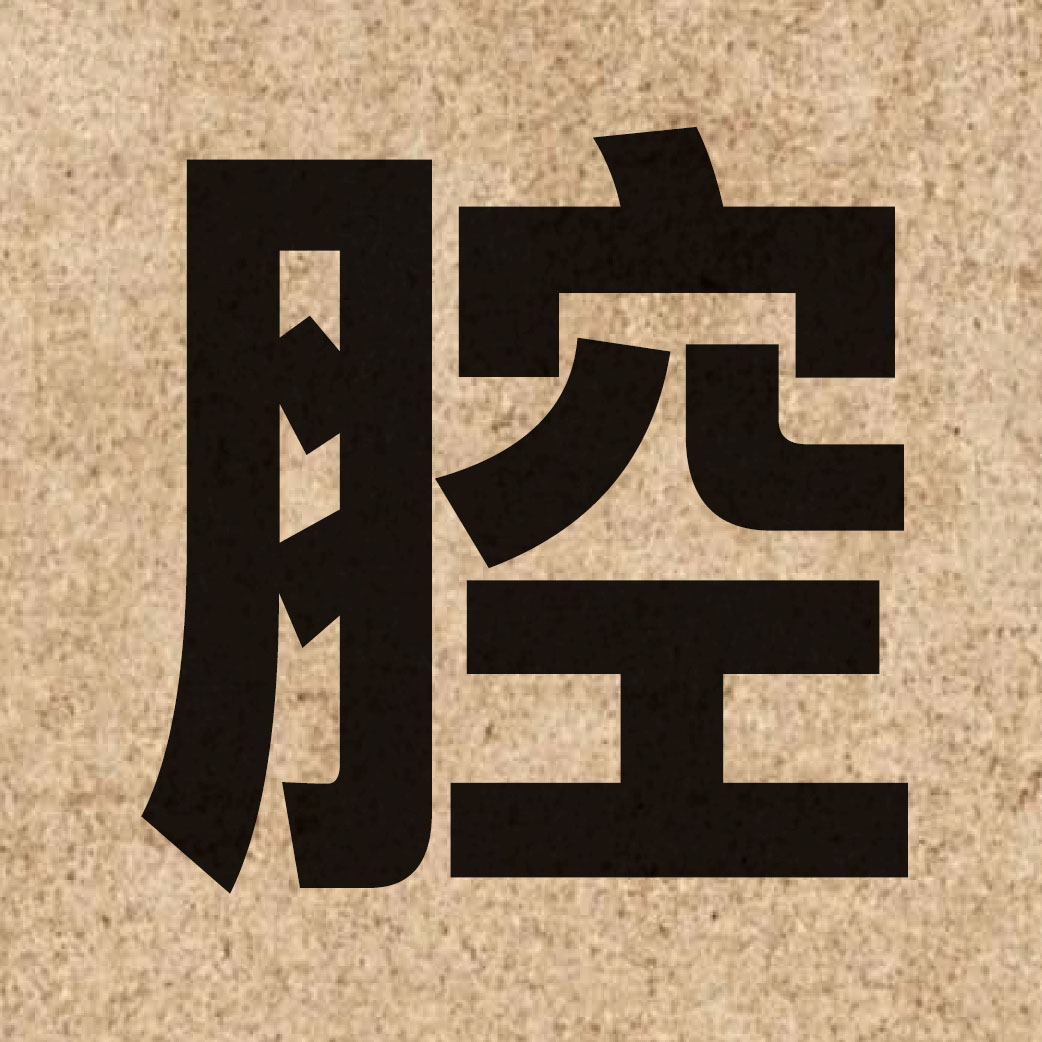
The Chinese character【腔】that I will teach you this time is a character that describes an organism or a shape. It is mainly used for the following meanings:
The interior or space of the body. Explanation: (1) The hollow part of an animal’s body. For example: “body cavity”, “oral cavity”, “thoracic cavity”, “nasal cavity”. (2) Melody. For example: “Kunqu” and “absurd tune”. (3) Accent, intonation and tone of voice. For example: “accent”, “Cantonese accent”, “pretentiousness”. (4) Words. Such as: “join in the conversation”, “join in the conversation”, “respond to the conversation”, and “make dirty jokes”.
Below, you can see how this Chinese character is pronounced.
Mandarin Pinyin of 【腔】:qiāng
Cantonese Jyutping of 【腔】:hong1
This introduces some basic knowledge regarding the Chinese character 【腔】︰
Here are some situations where you can use【腔】, for example:Describe an organism or shape , It means mainly the interior of the body or space.With the depth and complexity of Chinese characters, some refined meanings and specific usages might not be entirely expressed here.
【腔】serves as a standalone word but gains depth when partnered with others to form detailed expressions, like【胸腔、腹腔】(Mandarin Pinyin:xiōng qiāng 、fù qiāng/ Cantonese Jyutping:hung1 hong1 、fuk1 hong1)
The total stroke number of this character is 12 ,It is a more advanced Chinese character that is essential for daily use,This sentence highlights one way to use this character.:
胸腔內部容納了重要的器官。
The chest cavity houses important organs.
I wish for you to embrace the charm of Chinese and acquire greater knowledge along the way. Take a moment to explore the details provided.