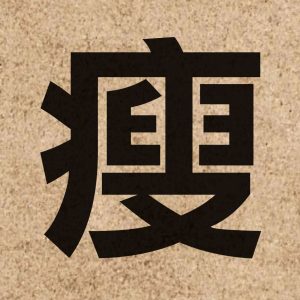
The Chinese character【腰】that we will explain today is a word that describes health or posture. It is mainly used for the following meanings:
Body parts. Explanation: (1) The middle of the body, where the upper and lower parts meet. Such as: “willow waist”, “twisted waist”, “waistline”, “waistline”. (2) The middle part of something. For example: “mountainside”, “interrupted in the middle”. (3) Kidneys. Such as: “kidney”, “pork kidney”. (4) Hanging around the waist. Such as: “waist bag”, “belt”. (5) Cashew: an evergreen tree. Native to South America. Leaves are alternate, obovate. The flower color is pink. The fruit is also called “cashew”, which is shaped like a kidney. The kernel is edible and the shell can be used to make oil.
You’ll find the pronunciation for this Chinese character here.
Mandarin Pinyin of 【腰】:yāo
Cantonese Jyutping of 【腰】:jiu1
This provides fundamental insights into the meaning of the character 【腰】︰
Here are some situations where you can use【腰】, for example:Describe health or posture , It means mainly body parts .The depth of meaning in Chinese characters encompasses intricate interpretations, some of which may be difficult to fully articulate here.
【腰】appears simple on its own, but when linked to other words, it creates nuanced phrases, like【腰部、腰痛】(Mandarin Pinyin:yāo bù 、yāo tòng/ Cantonese Jyutping:jiu1 bou6 、jiu1 tung3)
This character consists of 13 individual strokes,It is a more advanced Chinese character that is essential for daily use,Below is a sample sentence featuring this character in real usage.:
她因久坐而感到腰部酸痛。
She had back pain from sitting for too long.
May you appreciate the elegance of Chinese and grow in understanding through learning. Feel free to navigate through the materials leisurely.