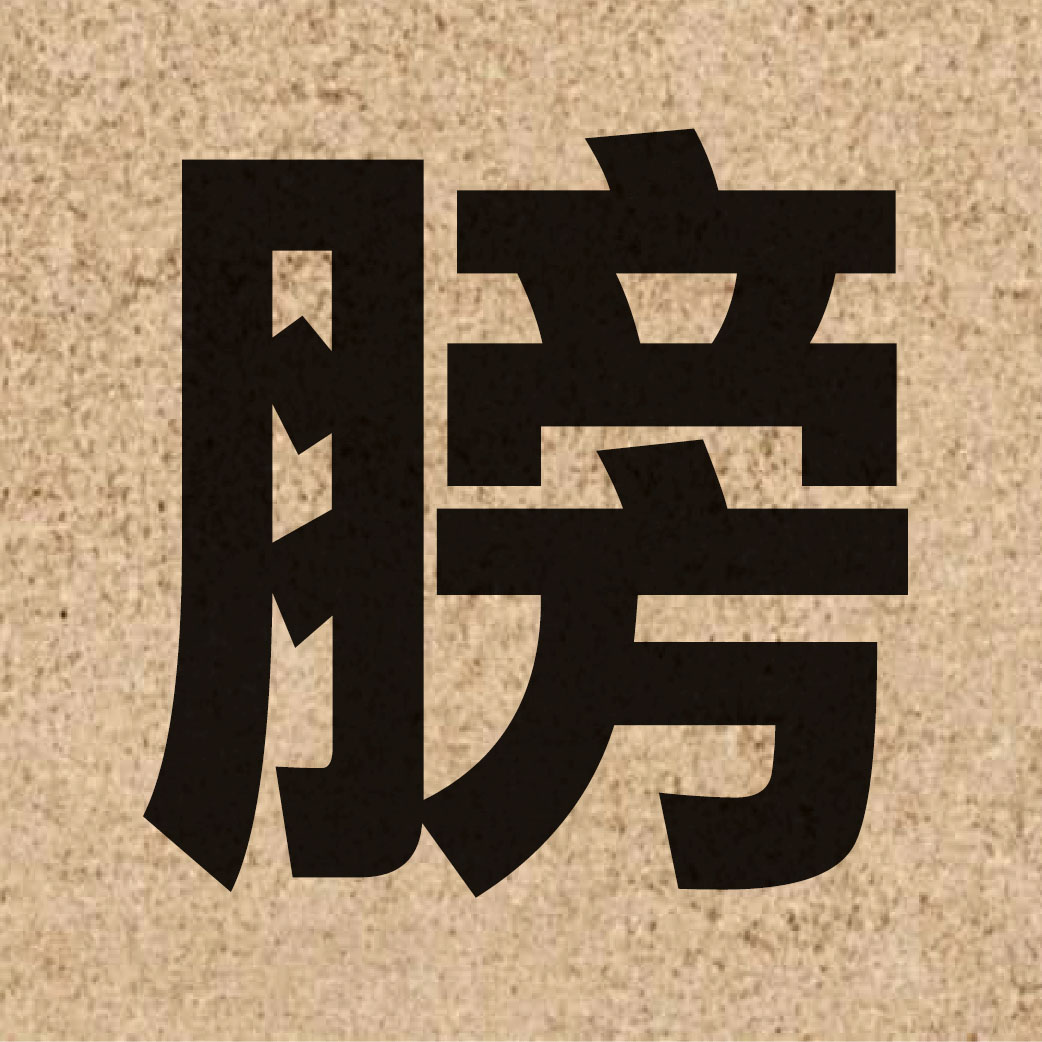
The Chinese character【膀】is used to describe the body or animals, and is mainly used for the following meanings:
Shoulders or wings. Explanation: 1. (1) The area between the shoulder and below and above the elbow. Such as: “shoulder”, “arm”, “arm”. (2) The wings of birds and insects. For example: wings. (3) Trotter: The upper part of the pig’s hind leg. For example: “The braised pork trotter my mom made is delicious!” 2. Bladder: the organ that stores urine. It is a pocket-like organ formed by muscle and membrane, located in front of the pelvic cavity and below the abdominal cavity.
Here is the phonetic guide for pronouncing this Chinese character.
Mandarin Pinyin of 【膀】:bǎng
Cantonese Jyutping of 【膀】:bong2
Below, I will share fundamental aspects of the meaning and usage of the character 【膀】︰
Here are some situations where you can use【膀】, for example:Describing a body or animal , It means mainly shoulders or wings .Given the broad interpretative scope of Chinese characters, certain deeper meanings and unique applications may be beyond this explanation.
【膀】is a simple word when used alone, but its meaning broadens when combined with others to form intricate phrases, like【翅膀、肩膀】(Mandarin Pinyin:chì bǎng 、jiān bǎng/ Cantonese Jyutping:ci3 bong2 、gin1 bong2)
To complete this character, you need 14 strokes,It is a Chinese character that, once mastered, allows for a deeper understanding and more diverse expression in communication,Listed below is a sentence demonstrating the application of this character.:
他用肩膀扛起了沉重的行李。
He carried the heavy luggage on his shoulders.
I hope you enjoy the richness of the Chinese language and gain new insights while browsing. Take your time to explore the details.