
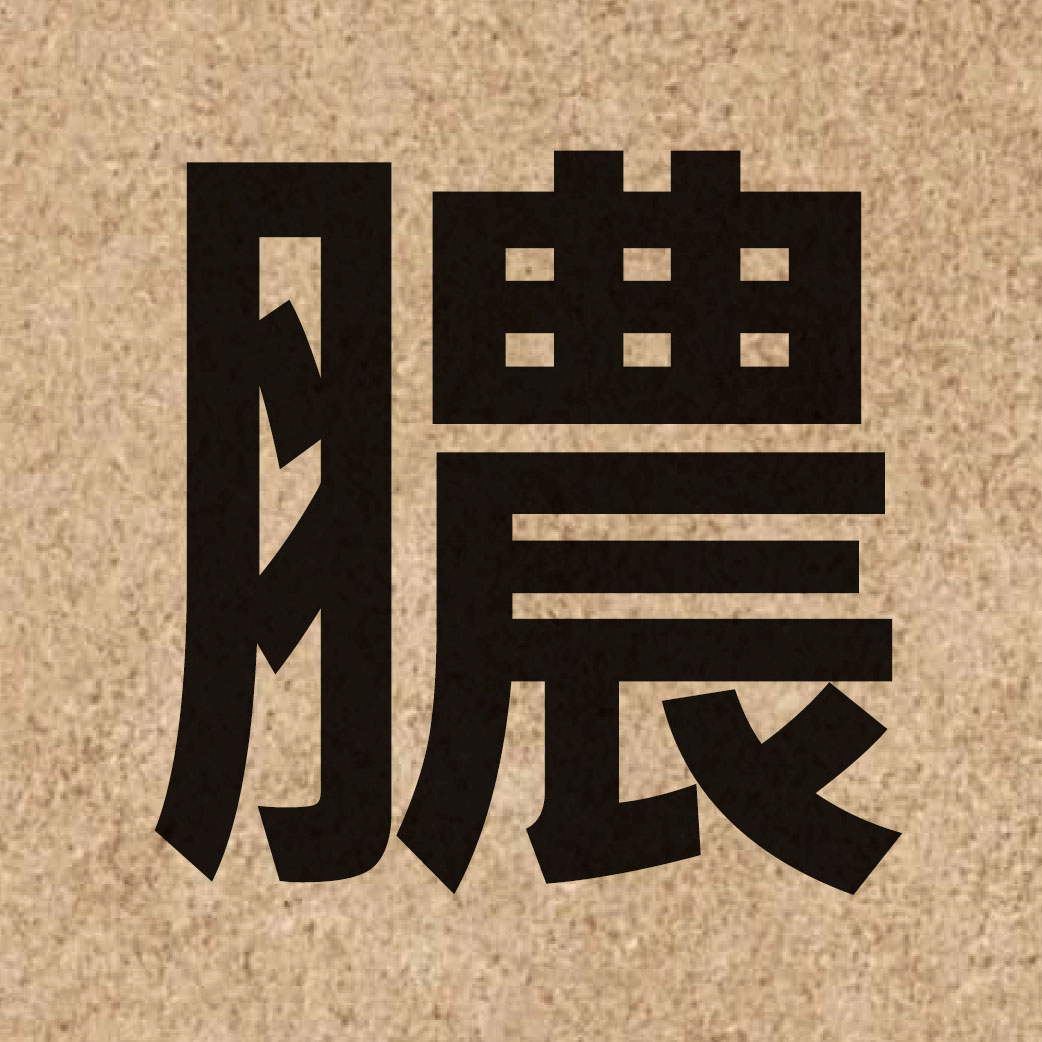
The Chinese character【膿】is a word that describes health or symptoms, and is mainly used for the following meanings:
Pus or infection. Explanation: The wound is infected by bacteria, causing the tissue to erode and decompose, resulting in a yellowish-white liquid. Such as: “purulence”, “pus discharge”, “pus bubble”, “pus water”.
Here is the phonetic guide for pronouncing this Chinese character.
Mandarin Pinyin of 【膿】:nóng
Cantonese Jyutping of 【膿】:nung4
Here’s an overview of the essential details about the character 【膿】︰
Here are some situations where you can use【膿】, for example:Describe health or symptoms , It means mainly pus or infection .Since Chinese characters have profound meanings, they may carry additional complexities and specific usages that are difficult to fully convey here.
【膿】is an individual word that merges with others to generate specific phrases, for example【化膿、膿包】(Mandarin Pinyin:huà nóng 、nóng bāo/ Cantonese Jyutping:faa3 nung4 、nung4 baau1)
This character is written with 17 strokes,It is a Chinese character that must be learned by those aiming to reach a near-native level of proficiency in Chinese,Listed below is a sentence demonstrating the application of this character.:
傷口若化膿,需要及時處理。
If the wound becomes festering, it needs to be treated promptly.
I hope you can appreciate and enjoy the beauty of Chinese, while gaining more knowledge here. Take your time exploring the information available.
