
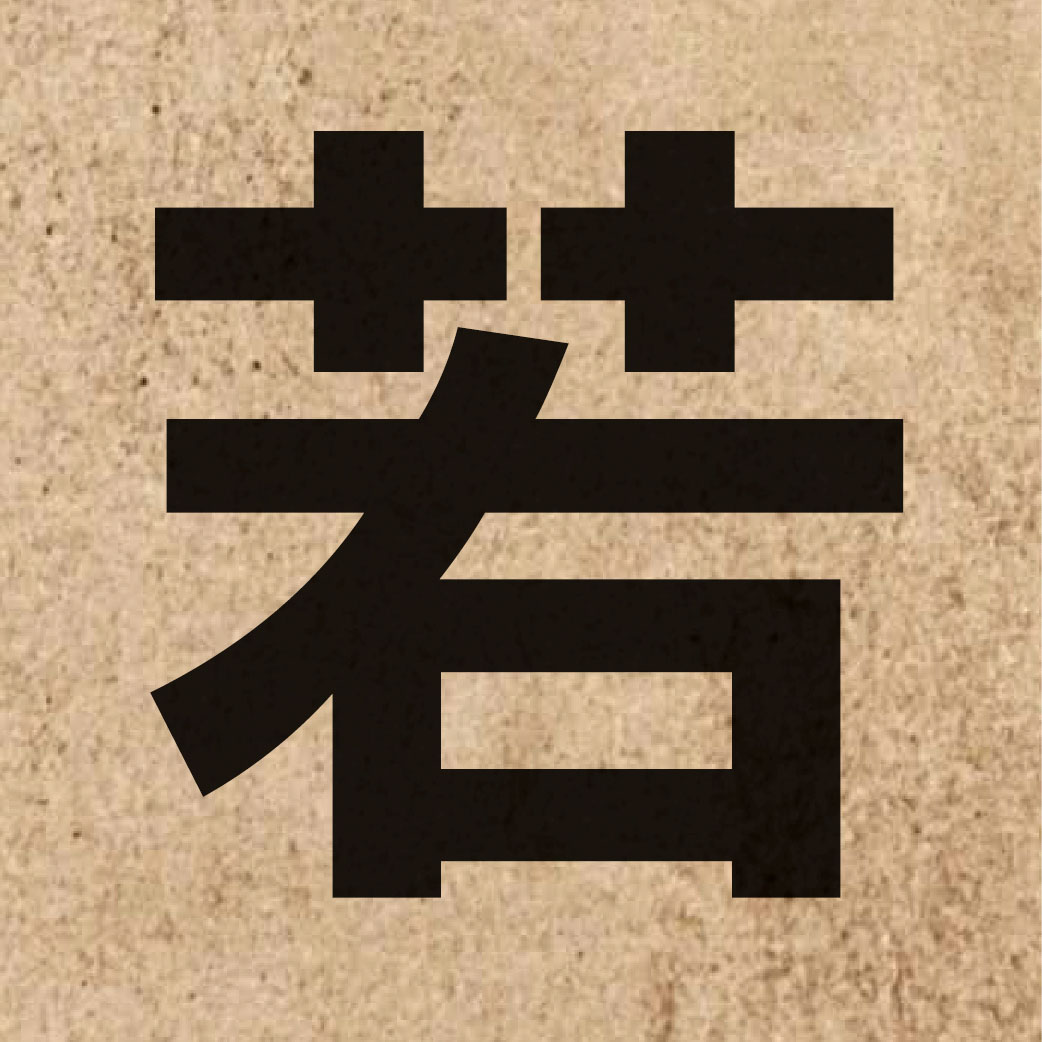
The Chinese word【若】that we will introduce this time is a word that describes mood or state. It is mainly used for the following meanings:
If or as if. Explanation: 1. (1) Similar to, as if. Such as: “not as good as”, “ecstatic”, “as if no one is around”, “wise but foolish”, “seemingly there and not there”. (2)Suppose, if. Indicates a hypothesis. For example: “if”, “suppose”, “if”, “if not”. (3) You, yours. Such as: “such people”. (4) Several: A word for approximate measurement, i.e., how much. Such as: “After a few years, you will understand Dad’s intentions.” 2. Prajna: A Buddhist term. Refers to the wisdom that can be realized. For example: “Buddhism believes that all wisdom is born from one’s own nature and does not require external help.”
You’ll find the pronunciation for this Chinese character here.
Mandarin Pinyin of 【若】:ruò
Cantonese Jyutping of 【若】:joek6
Below is a description of the essential features of the character 【若】︰
Here are some situations where you can use【若】, for example:Describes tone or state , It means mainly if or as if .The intricacy of Chinese characters allows for multiple layers of meaning, some of which may not be entirely outlined here.
【若】is an individual word whose meaning expands when incorporated into combinations, such as【如果、若干】(Mandarin Pinyin:rú guǒ 、ruò gàn/ Cantonese Jyutping:jyu4 gwo2 、joek6 gon1)
This character is composed using 9 strokes,It is a highly common and fundamental Chinese character that must be learned,Below is an example sentence related to this character.:
若果天氣好,我們就去遠足吧。
If the weather is fine, let’s go hiking.
May you embrace the beauty of Chinese and enhance your knowledge here. Feel free to explore the available information at your leisure.
