
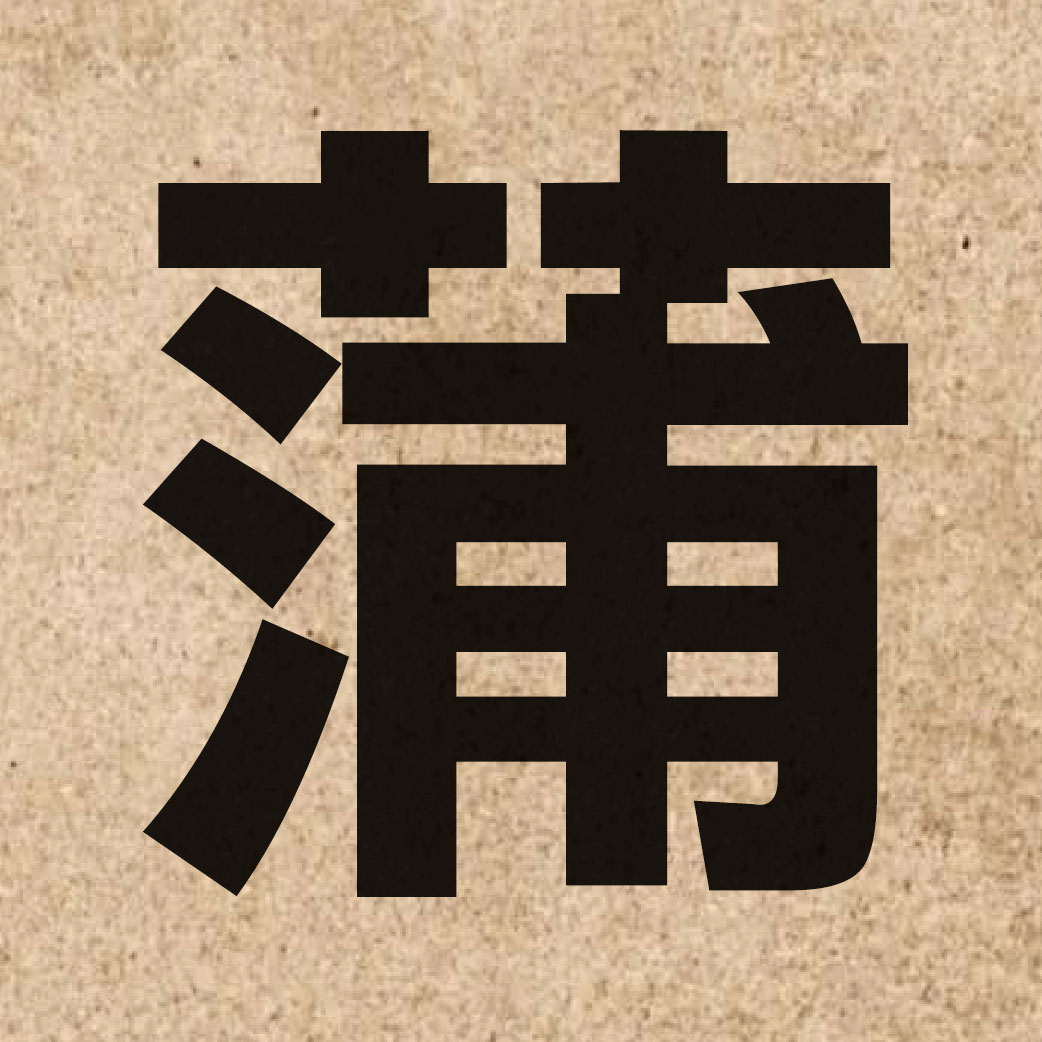
The Chinese character【蒲】that we will explain today is a word that describes nature or culture. It is mainly used for the following meanings:
Plant or place name. Explanation: (1) Cattail. Perennial herb. Can be used to weave mats and fans. Such as: “cattail leaf fan”, “cushion”. (2) Dandelion: a perennial herb. The leaves grow in clusters from the roots. The top of the flower has yellow flowers with white pappus that will fly away in the wind. The young leaves are edible and the roots can be used as medicine. (3) Poplar: Poplar. It is the first to wither among the trees, so it is used to describe a woman with a weak constitution or a woman of low status. For example: “the posture of cattails and willows.”
Below is the correct pronunciation of this particular Chinese character.
Mandarin Pinyin of 【蒲】:pú
Cantonese Jyutping of 【蒲】:pou4
Below, I will share fundamental aspects of the meaning and usage of the character 【蒲】︰
Here are some situations where you can use【蒲】, for example:Describing nature or culture , It means mainly a plant or place name .Given the broad interpretative scope of Chinese characters, certain deeper meanings and unique applications may be beyond this explanation.
【蒲】is a simple word when used alone, but its meaning broadens when combined with others to form intricate phrases, like【蒲公英、蒲松齡】(Mandarin Pinyin:pú gōng yīng 、pú sōng líng/ Cantonese Jyutping:pou4 gung1 jing1 、pou4 cung4 ling4)
To complete this character, you need 14 strokes,It is a Chinese character that, once mastered, allows for a deeper understanding and more diverse expression in communication,Below, you’ll find a sentence connected to this character.:
蒲松齡是著名的文學作品《聊齋志異》的作者。
Pu Songling is the author of the famous literary work “Strange Stories from a Chinese Studio”.
I hope you enjoy the richness of the Chinese language and gain new insights while browsing. Take your time to explore the details.
