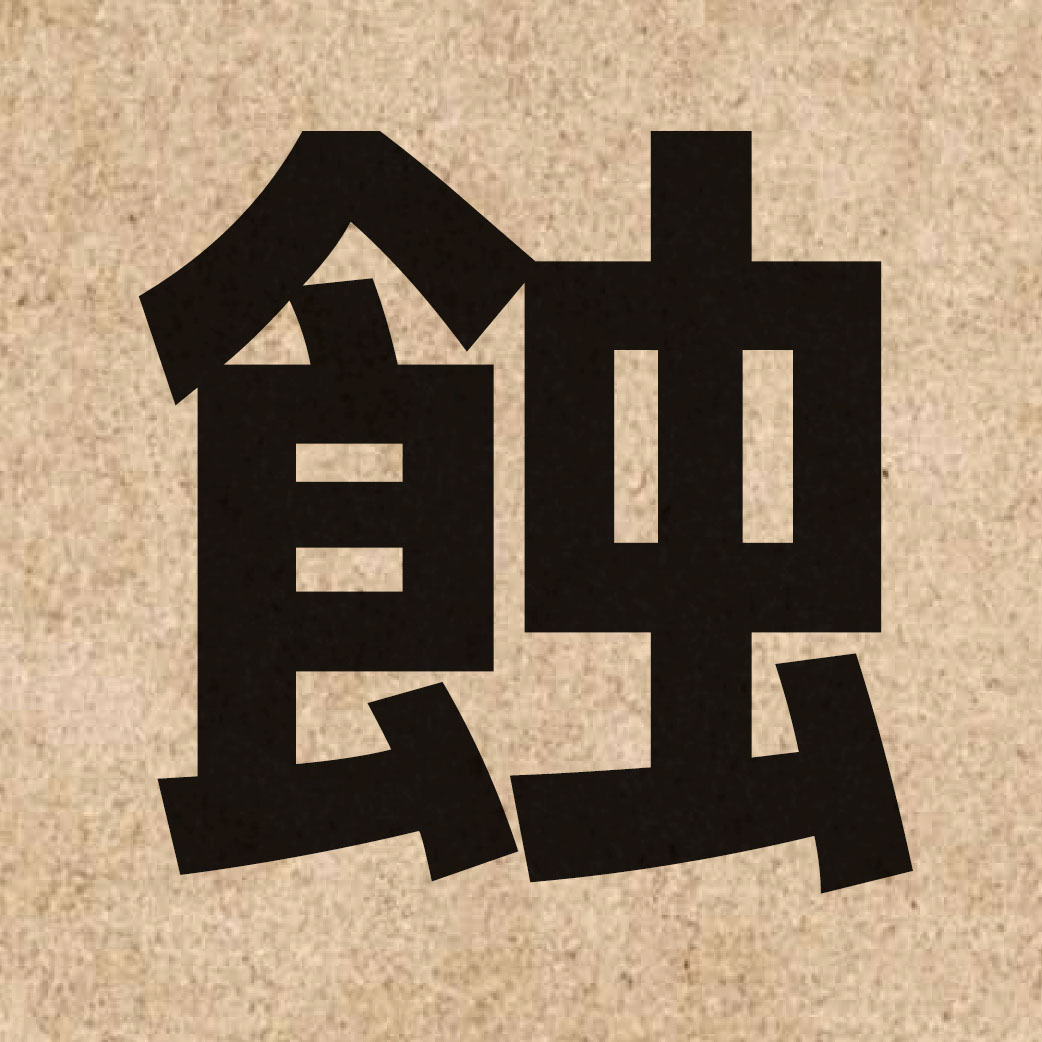
The Chinese character【蝕】is used to describe an action or an object, and is mainly used to mean the following:
Defects or erosion. Explanation: (1) The shadow phenomenon caused by the sun being blocked by the moon or the moon being blocked by the earth. For example: “solar eclipse” and “lunar eclipse”. (2) Defective or damaged. Such as: “erosion”, “corrosion”, “debris”, “corrosion”.
Here is the phonetic guide for pronouncing this Chinese character.
Mandarin Pinyin of 【蝕】:shí
Cantonese Jyutping of 【蝕】:sit6/sik6
Here’s a brief introduction to the basic aspects of the character 【蝕】︰
Here are some situations where you can use【蝕】, for example:Describing an action or object , It means mainly a defect or erosion .Since Chinese characters carry vast meanings, some subtle aspects and specific applications might not be fully detailed in this explanation.
【蝕】is a fundamental term that integrates with others to create meaningful expressions, such as【虧蝕、侵蝕】(Mandarin Pinyin:kuī shí 、qīn shí/ Cantonese Jyutping:kwai1 sik6 、cam1 sik6)
The number of strokes required for this character is 14 ,It is a more advanced Chinese character that is essential for daily use,Listed below is a sentence demonstrating the application of this character.:
雨水侵蝕了老牆上的磚石。
Rainwater eroded the masonry of the old wall.
Hoping that you’ll immerse yourself in the wonders of Chinese and gain meaningful knowledge here. There’s plenty to see, so explore at your convenience.