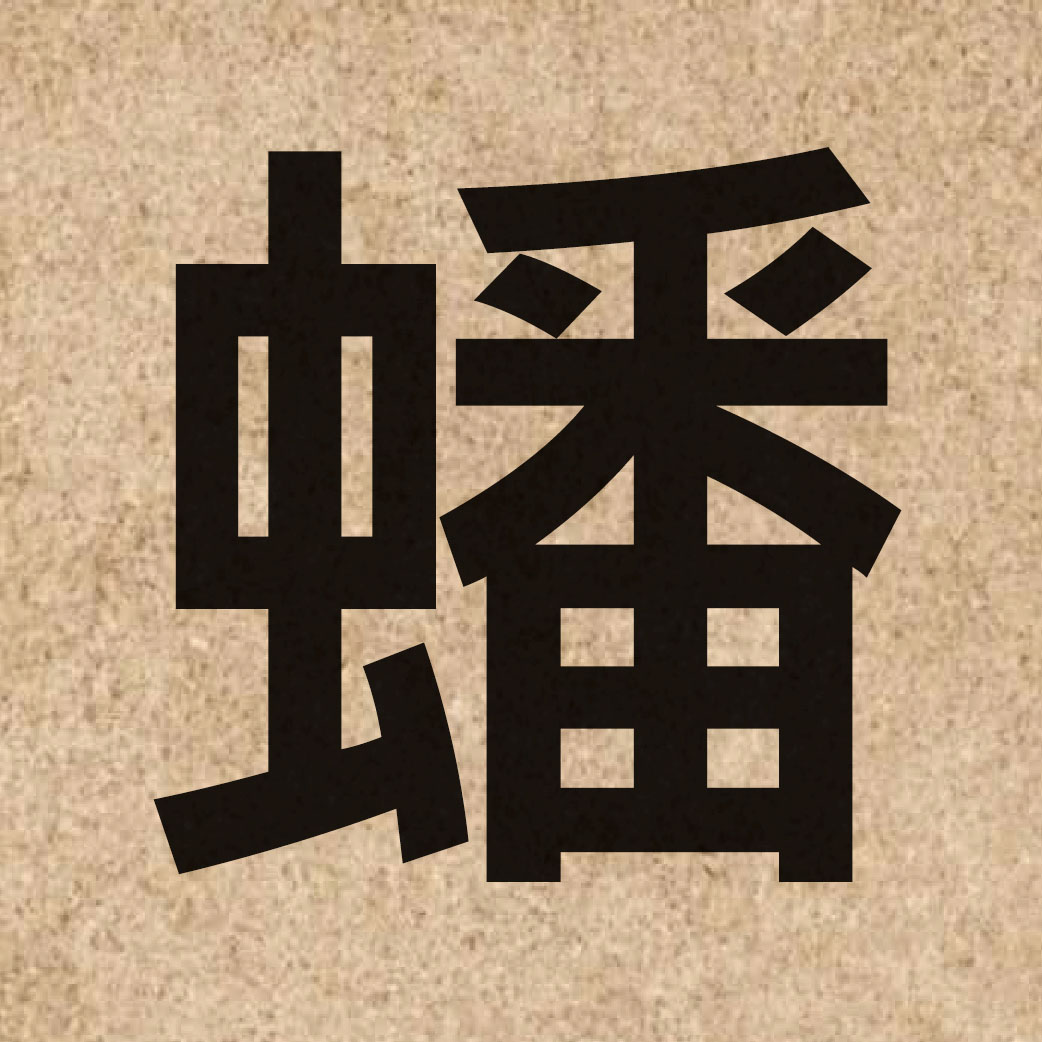
The Chinese character【蟠】that I will teach you this time is a character that describes an action or shape. It is mainly used for the following meanings:
Circling or entwined. Explanation: (1) To curl or coil. For example: “Dragons coiling and tigers crouching.” (2)Peach: A>a kind of plant. Native to the mainland. The fruit is also called “Peach”. It is flat and round with a depression in the middle and tastes sweet. B>The fairy peach in mythology. Legend has it that it bears fruit once every thousands of years, and if you eat it you can become an immortal. For example: “In Journey to the West, the Monkey King was in charge of guarding the Peach Garden in Heaven, but he stole and ate all the peaches.”
Below, you can see how this Chinese character is pronounced.
Mandarin Pinyin of 【蟠】:pán
Cantonese Jyutping of 【蟠】:pun4
Below, you’ll find general facts about the Chinese character 【蟠】︰
Here are some situations where you can use【蟠】, for example:Describe an action or shape , It means mainly to twirl or entwine..The vast and layered meanings of Chinese characters can involve refined details and particular applications that may not be completely conveyed here.
【蟠】is a word that, when joined with additional words, constructs more precise phrases, like【盤蟠、蟠龍】(Mandarin Pinyin:pán pán 、pán lóng/ Cantonese Jyutping:pun4 faan4 、faan4 lung4)
To form this character, you need 18 strokes,It is a highly difficult Chinese character that is rarely used in daily life and has a lower frequency of usage,Here is a sentence demonstrating the use of this character.:
蟠龍的雕刻在廟宇中十分壯觀。
The carvings of coiled dragons are very spectacular in the temple.
I trust you’ll enjoy immersing yourself in the world of Chinese and discovering more insights. You can browse through the additional details at your own speed.