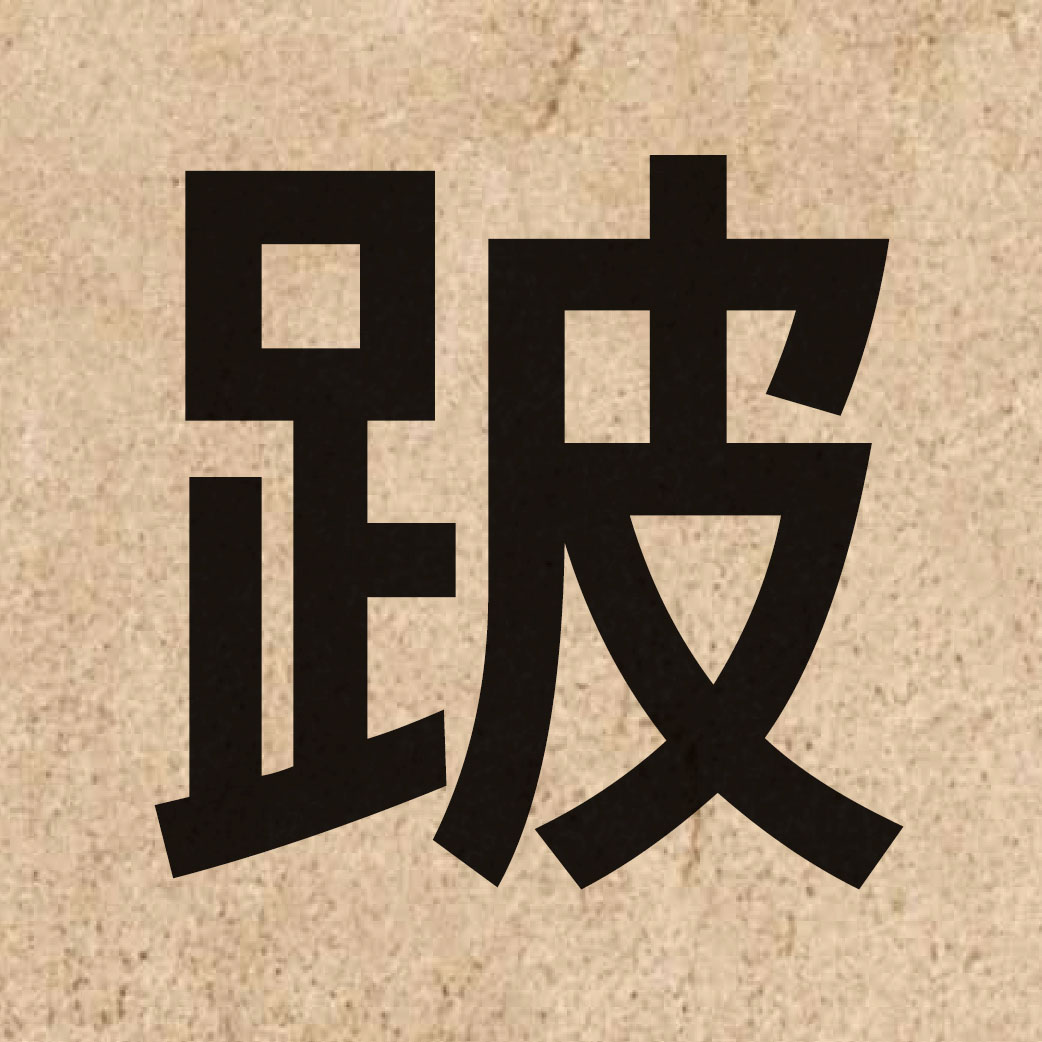
The Chinese character【跛】that I will teach you this time is a word that describes health or movement. It is mainly used for the following meanings:
Limping or lameness.
Below, you can see how this Chinese character is pronounced.
Mandarin Pinyin of 【跛】:bǒ
Cantonese Jyutping of 【跛】:bai1
Below is a description of the essential features of the character 【跛】︰
Here are some situations where you can use【跛】, for example:Describe health or movement , It means mainly lameness or limping. .Since Chinese characters embody profound layers of interpretation, some complex meanings may be beyond the scope of this explanation.
【跛】is an individual word whose meaning expands when incorporated into combinations, such as【跛足、跛行】(Mandarin Pinyin:bǒ zú 、bǒ háng/ Cantonese Jyutping:bai1 zuk1 、bai1 hang4)
This character is composed using 12 strokes,It is a highly difficult Chinese character that is rarely used in daily life and has a lower frequency of usage,Here is a single example incorporating this character.:
他因舊傷跛行仍堅持工作。
He continued to work despite his limp from an old injury.
Hoping you will delight in learning Chinese and deepen your understanding as you go. There’s more to discover, so take your time.