
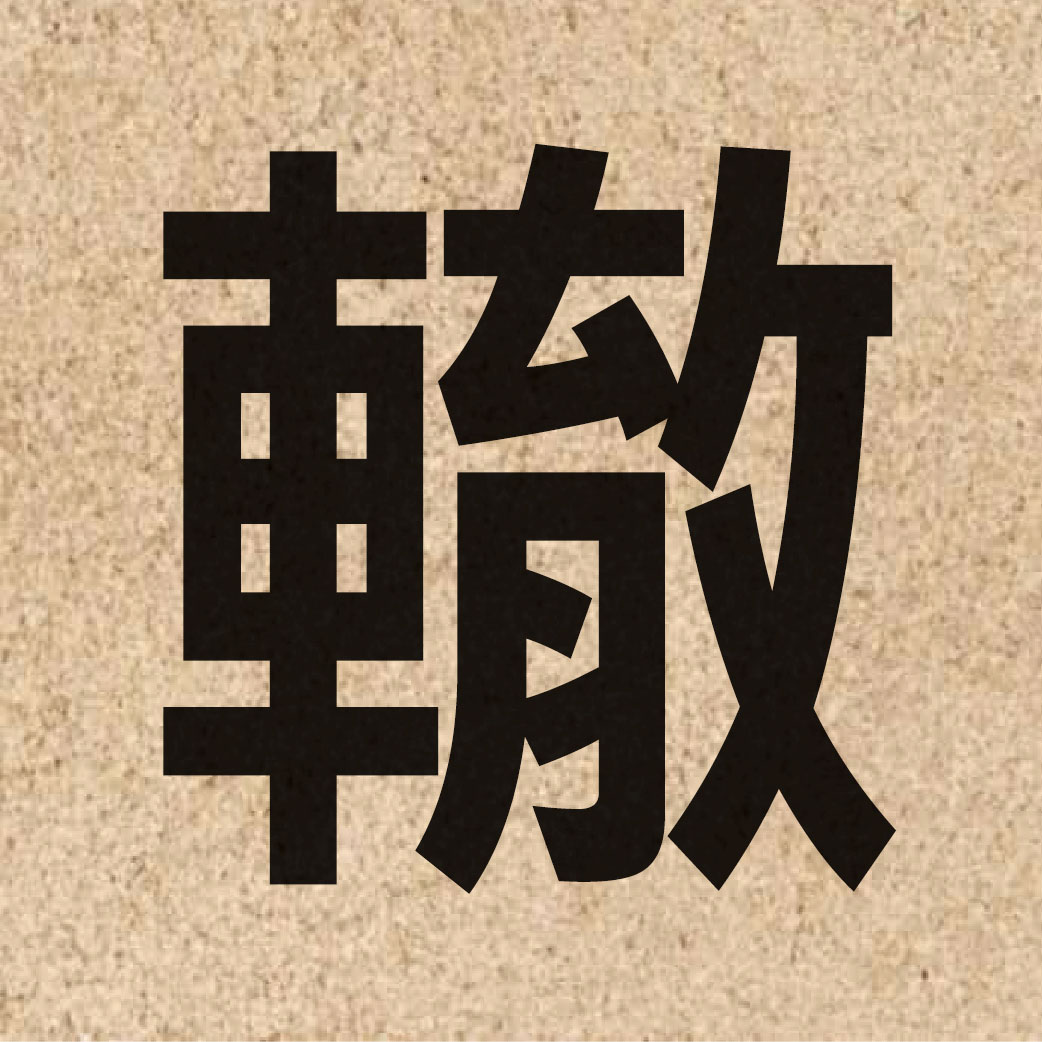
The Chinese character【轍】that we will explain today is a word that describes traces or directions. It is mainly used for the following meanings:
Rut or approach. Explanation: 1. (1) The traces left by the wheels. For example: “wheel tracks”, “wheel tracks”, “building a car behind closed doors and finding the right track when it comes out”. (2) Refers to past events. Such as: “exactly the same”, “repeat the same mistakes”. 2. Method. For example: “Nothing can be done!”
The pronunciation of this specific Chinese character is given below.
Mandarin Pinyin of 【轍】:zhé
Cantonese Jyutping of 【轍】:cit3
This introduces some basic knowledge regarding the Chinese character 【轍】︰
Here are some situations where you can use【轍】, for example:Describe a trace or direction , It means mainly a rut or approach .Given the broad and profound nature of Chinese characters, some nuances and precise usages may not be entirely captured in this space.
【轍】serves as a standalone word but gains depth when partnered with others to form detailed expressions, like【車轍、方法轍】(Mandarin Pinyin:chē zhé 、fāng fǎ zhé/ Cantonese Jyutping:ce1 cit3 、fong1 faat3 cit3)
The total stroke number of this character is 18 ,Its usage is more restrictive, making it an advanced-level Chinese character that one only needs to learn when seeking to challenge their own abilities,Below is a sample sentence featuring this character in real usage.:
道路上的車轍十分明顯。
The ruts on the road were very obvious.
I hope you find delight in the richness of the Chinese language and learn new things here. Take your time going through the materials provided.
