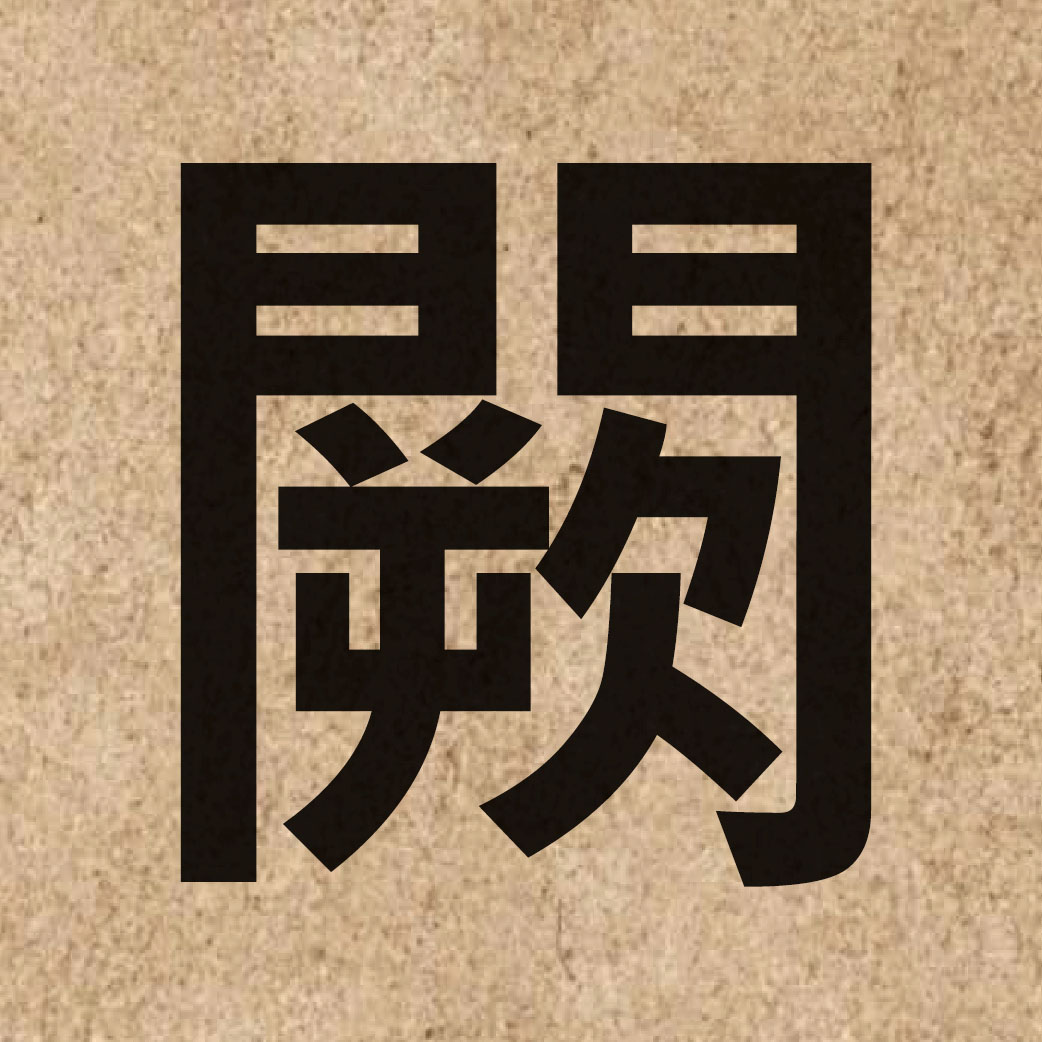
The Chinese character【闕】that I will teach you this time is a word that describes a building or a state. It is mainly used for the following meanings:
Palace or missing. Explanation: 1. (1) Towers on both sides of the gate of an ancient palace for observation, with a passage in the middle. Such as: “palace”, “city”. (2) Generally refers to the place where the emperor lives. Such as: “Imperial Palace”, “Under the Palace”, “Facing the Heavenly Palace”, “Heart in Mind of Wei Palace”. 2. (1) Omission or shortage. Meaning “lack”. Such as: “missing text”, “missing words”, “missing”, “leaving it missing”. (2) Faults and shortcomings. Meaning “lack”. Such as: “missing”, “holding on to the remnants and guarding the gaps”, “picking up the omissions and filling the gaps”.
You can refer to this for the pronunciation of the mentioned Chinese character.
Mandarin Pinyin of 【闕】:què
Cantonese Jyutping of 【闕】:kyut3
Below, I will share fundamental aspects of the meaning and usage of the character 【闕】︰
Here are some situations where you can use【闕】, for example:Describe a building or state , It means mainly palace or missing.As Chinese characters have broad and intricate meanings, certain details might be too specific to be entirely explained in this overview.
【闕】is a simple word when used alone, but its meaning broadens when combined with others to form intricate phrases, like【宮闕、缺闕】(Mandarin Pinyin:gōng què 、quē què/ Cantonese Jyutping:gung1 kyut3 、kyut3 kyut3)
To complete this character, you need 18 strokes,It is a Chinese character that must be learned by those aiming to reach a near-native level of proficiency in Chinese,This sentence serves as an example of how to use this character.:
古代的宮闕宏偉壯麗。
The ancient palaces were magnificent and majestic.
Wishing you an enriching journey in discovering the beauty of Chinese and acquiring new knowledge. Feel free to check out the details here.