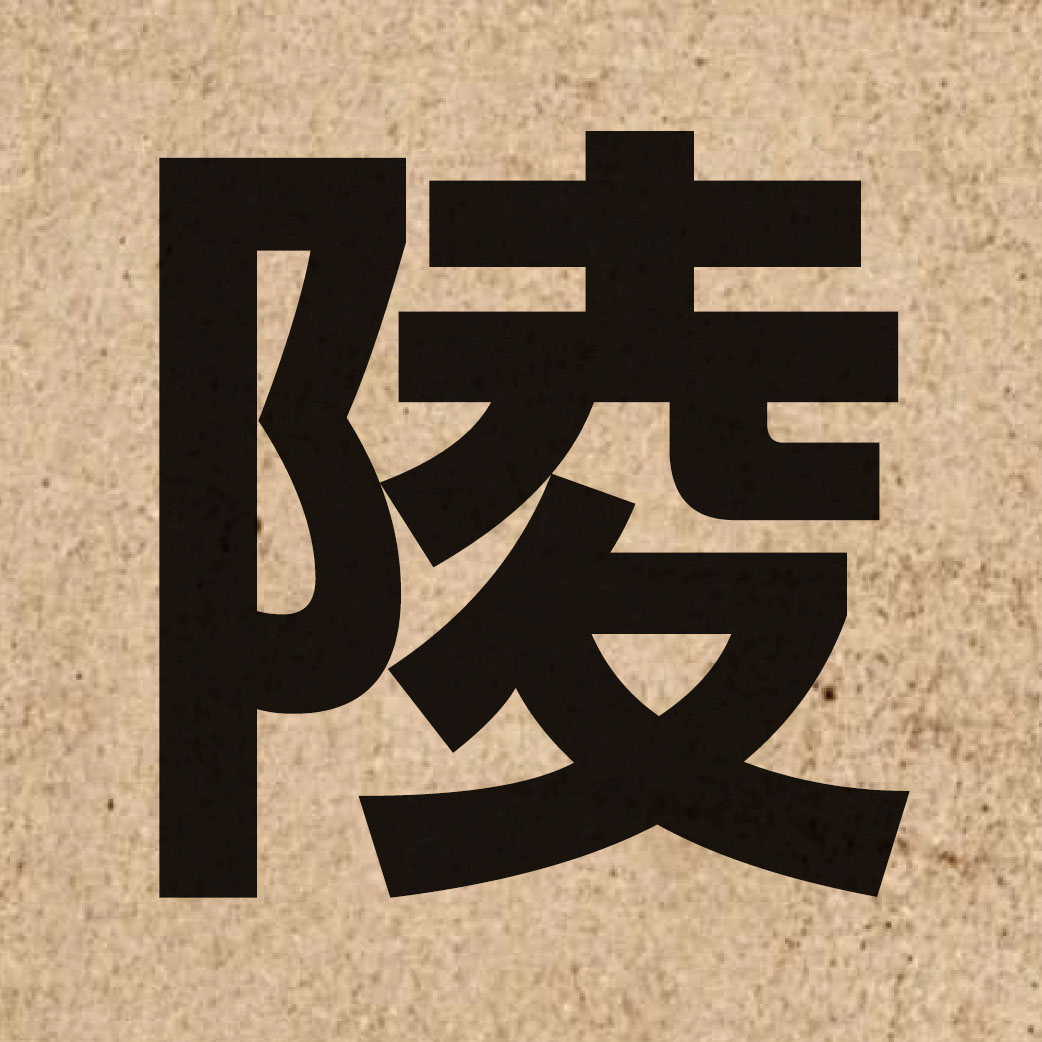
The Chinese character【陵】is a word that describes terrain or culture, and is mainly used for the following meanings:
A mausoleum or cemetery. Explanation: (1) A large mound. Such as: “hill”, “mountain”, “hill”. (2) The tomb of an emperor or great man. For example: “Mausoleum”, “Huangling”, “Sun Yat-sen Mausoleum”, and “Thirteen Tombs”. (3) Transcendence. Same as “Ling”. Such as: “Tomb carriage”, “Tomb ceremony”. (4) Infringement and bullying. Same as “Ling”. Such as: “bullying the mausoleum” and “humiliating the mausoleum”.
Here is the phonetic guide for pronouncing this Chinese character.
Mandarin Pinyin of 【陵】:líng
Cantonese Jyutping of 【陵】:ling4
This introduces some basic knowledge regarding the Chinese character 【陵】︰
Here are some situations where you can use【陵】, for example:Describing terrain or culture , It means mainly a mountain or a cemetery. .Given the broad and profound nature of Chinese characters, some nuances and precise usages may not be entirely captured in this space.
【陵】serves as a standalone word but gains depth when partnered with others to form detailed expressions, like【陵墓、山陵】(Mandarin Pinyin:líng mù 、shān líng/ Cantonese Jyutping:ling4 mou6 、saan1 ling4)
The total stroke number of this character is 10 ,It is a more advanced Chinese character that is essential for daily use,Here’s a practical example using this character.:
他參觀了古代君王的陵墓。
He visited the tombs of ancient kings.
I hope you find delight in the richness of the Chinese language and learn new things here. Take your time going through the materials provided.