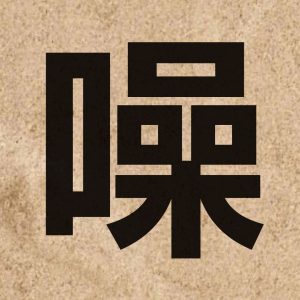
The Chinese character【題】(question) that we will be discussing today is a word that describes content or a test. It is mainly used for the following meanings:
Title or question. Explanation: (1) Uh. Such as: “Tattoo carving title”. (2) Mark or write on it. Such as: “inscription”, “inscription”, “title”, “poetry”. (3) A title used to describe a poem, article, speech, etc. For example: “Title of article”, “Title of poem”, “Title”. (4) Items that require answers during an exam. For example: “test questions”, “exam questions”, “multiple choice questions”, and “essay questions”. (5)Comments. Such as: “appreciation of the title” and “review of the title”. (6) Question: A> refers to the test question. For example: “Are the questions in this exam difficult?” B> refers to the titles of poems and articles. For example, “What is the title of this poem?” (7) Quantifier. The units used to calculate the problem. For example: “Ten-question essay” and “Two-question essay”.
Below is the correct pronunciation of this particular Chinese character.
Mandarin Pinyin of 【題】:tí
Cantonese Jyutping of 【題】:tai4
This section covers the key information related to the character 【題】︰
Here are some situations where you can use【題】, for example:Describe the content or test , It means mainly a title or question .Chinese characters possess deep and diverse meanings, and some detailed aspects may not be entirely covered in this discussion.
【題】can be used alone, but when combined with other words, it forms richer expressions, such as【題目、命題】(Mandarin Pinyin:tí mù 、mìng tí/ Cantonese Jyutping:tai4 muk6 、ming6 tai4)
There are exactly 18 strokes in this character,It is a highly common and fundamental Chinese character that must be learned,Below, you’ll find a sentence connected to this character.:
他回答了考試中的所有題目。
He answered all the questions in the exam.
I hope you appreciate the depth of the Chinese language and gain useful knowledge here. Explore the information at your own pace.