
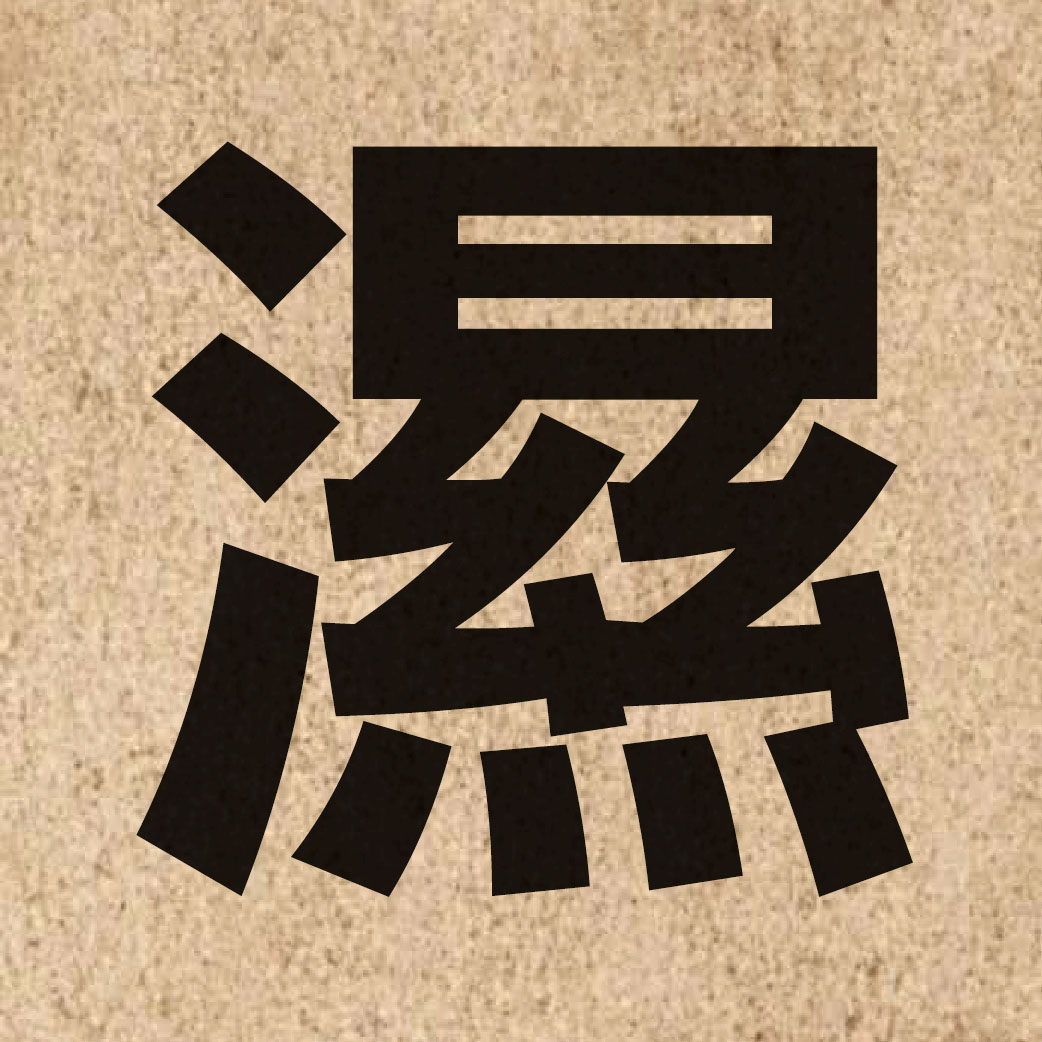
The Chinese character【濕】is used to describe the state or weather, and is mainly used for the following meanings:
damp. Explanation: (1) Rich in water. The opposite of “干”. Same as “wet”. Such as: “low humidity”, “moist”, “wet towel”, “damp”. (2)Getting wet. Same as “wet”. For example: “get wet”, “don’t get your clothes wet!” (3) Disease. Same as “wet”. Such as: rheumatism.
Below, you can see how this Chinese character is pronounced.
Mandarin Pinyin of 【濕】:shī
Cantonese Jyutping of 【濕】:sap1
Here is an explanation of the primary details of the Chinese character 【濕】︰
Here are some situations where you can use【濕】, for example:Describe the state or weather , It means mainly damp .The vast and layered meanings of Chinese characters can involve refined details and particular applications that may not be completely conveyed here.
【濕】stands alone as a word, yet when paired with others, it leads to complex linguistic structures, for instance【濕度、濕潤】(Mandarin Pinyin:shī dù 、shī rùn/ Cantonese Jyutping:sap1 dou6 、sap1 jeon6)
Writing this character requires 17 strokes,It is a more advanced Chinese character that is essential for daily use,Here’s a practical example using this character.:
雨後空氣濕潤,令人感覺清新。
The air is moist after the rain and feels fresh.
I trust you’ll enjoy immersing yourself in the world of Chinese and discovering more insights. You can browse through the additional details at your own speed.
