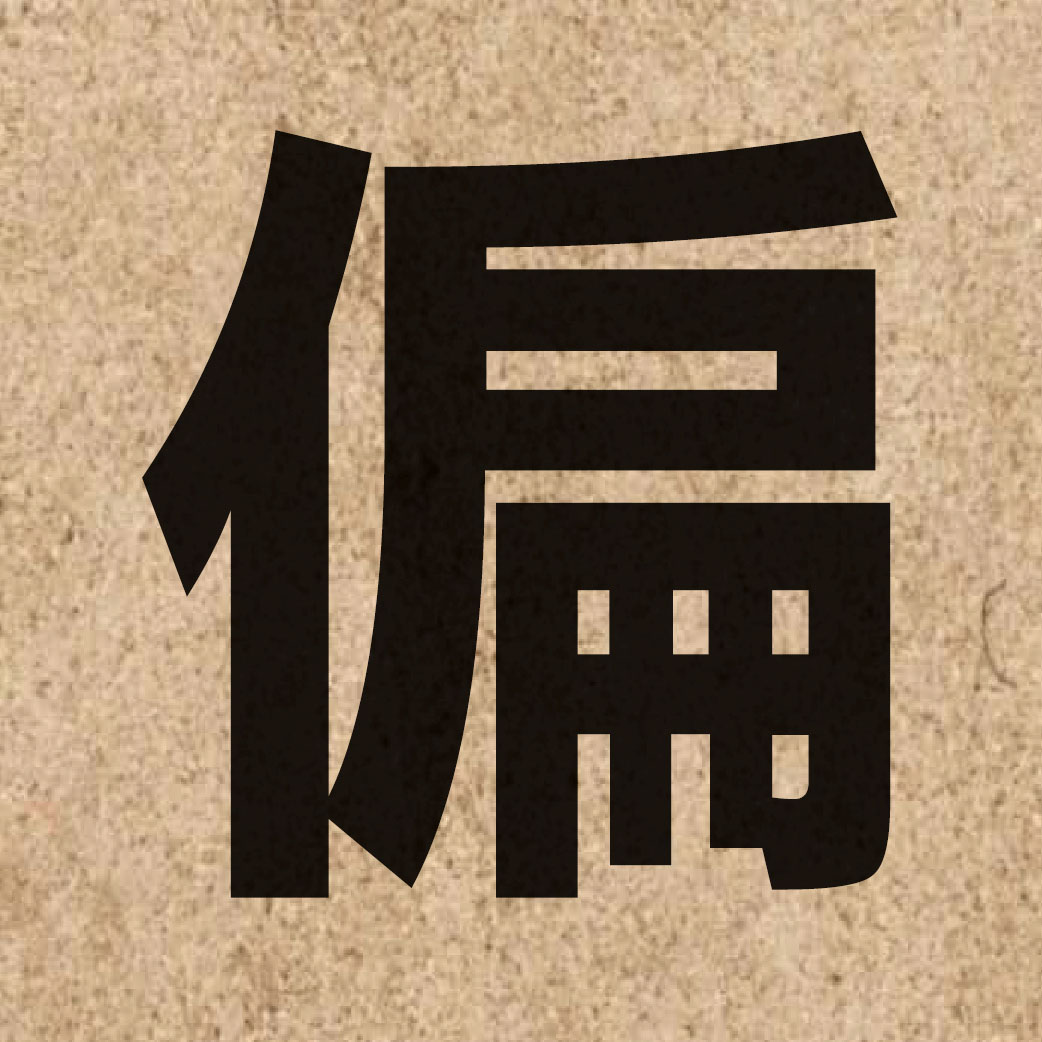
The Chinese word【偏】that we will introduce this time is a word that describes a state or behavior. It is mainly used for the following meanings:
Biased or untrue. Explanation: (1) Not in the center, crooked. Such as: “bias”, “skew”, “impartial”. (2) Unfair and selfish. Such as: “prejudice”, “partiality”, “partiality”, “bias”. (3) Indicates something that is unexpected or contrary to one’s original intention. For example: “Pianhuan”, “When it rains, it pours.” (4) It means deliberately going against external requirements. For example: “He wants me to go, but I won’t go.”
Here is the pronunciation of this Chinese character.
Mandarin Pinyin of 【偏】:piān
Cantonese Jyutping of 【偏】:pin1
This section covers the key information related to the character 【偏】︰
Here are some situations where you can use【偏】, for example:Describes a state or behavior , It means mainly biased or untrue.Since Chinese characters embody profound layers of interpretation, some complex meanings may be beyond the scope of this explanation.
【偏】can be used alone, but when combined with other words, it forms richer expressions, such as【偏心、偏僻】(Mandarin Pinyin:piān xīn 、piān pì/ Cantonese Jyutping:pin1 sam1 、pin1 pik1)
There are exactly 11 strokes in this character,It is a more advanced Chinese character that is essential for daily use,The sentence below shows how this character appears in written language.:
這個村莊位於偏僻的山區。
The village is located in a remote mountainous area.
Hoping you will delight in learning Chinese and deepen your understanding as you go. There’s more to discover, so take your time.