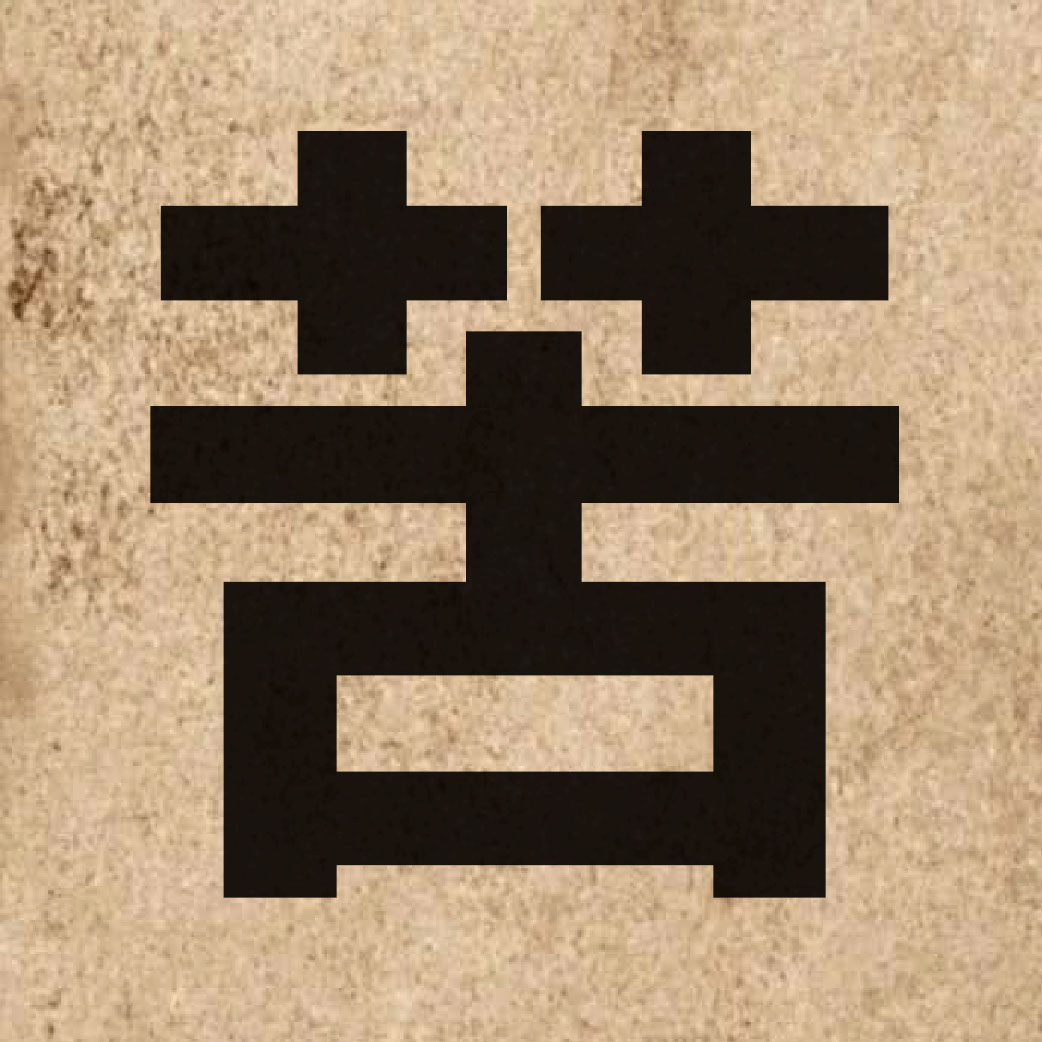
The Chinese character【苦】is a word that describes feelings or tastes, and is mainly used for the following meanings:
Pain and hardship. Explanation: (1) The taste of coptis root or bile. The opposite of “sweet” and “sweet”. For example: “bitter taste”, “This medicine is so bitter!” (2) A heavy and unbearable feeling or an unbearable situation. Such as: “complain”, “pain”, “hard work”, “hard work and perseverance”, “suffering”, “find joy in suffering”, “sweetness comes after bitterness”. (3) Patient and dedicated. Such as: “bitter admonition”, “bitter persuasion”, “work hard”, “study hard”. (4) Suffering over something. For example: “Suffering from long rain.” (5) Hard and uncomfortable. Such as: “difficult situation”, “hard days”, “a bitter smile”. (6) Melancholy. For example: “looking sad”. (7) Having a bitter taste. Such as: “bitter tea”, “bitter melon”. (8) Tempering. For example: “To make his mind suffer.”
Here is the phonetic guide for pronouncing this Chinese character.
Mandarin Pinyin of 【苦】:kǔ
Cantonese Jyutping of 【苦】:fu2
Below is a description of the essential features of the character 【苦】︰
Here are some situations where you can use【苦】, for example:Describing emotions or tastes , It means mainly pain, hardship .Since Chinese characters have profound meanings, they may carry additional complexities and specific usages that are difficult to fully convey here.
【苦】is an individual word whose meaning expands when incorporated into combinations, such as【辛苦、苦澀】(Mandarin Pinyin:xīn kǔ 、kǔ sè/ Cantonese Jyutping:san1 fu2 、fu2 gip3)
This character is composed using 9 strokes,It is a highly common and fundamental Chinese character that must be learned,Here’s a practical example using this character.:
他為了夢想付出了很多辛苦。
He worked very hard for his dream.
I hope you can appreciate and enjoy the beauty of Chinese, while gaining more knowledge here. Take your time exploring the information available.