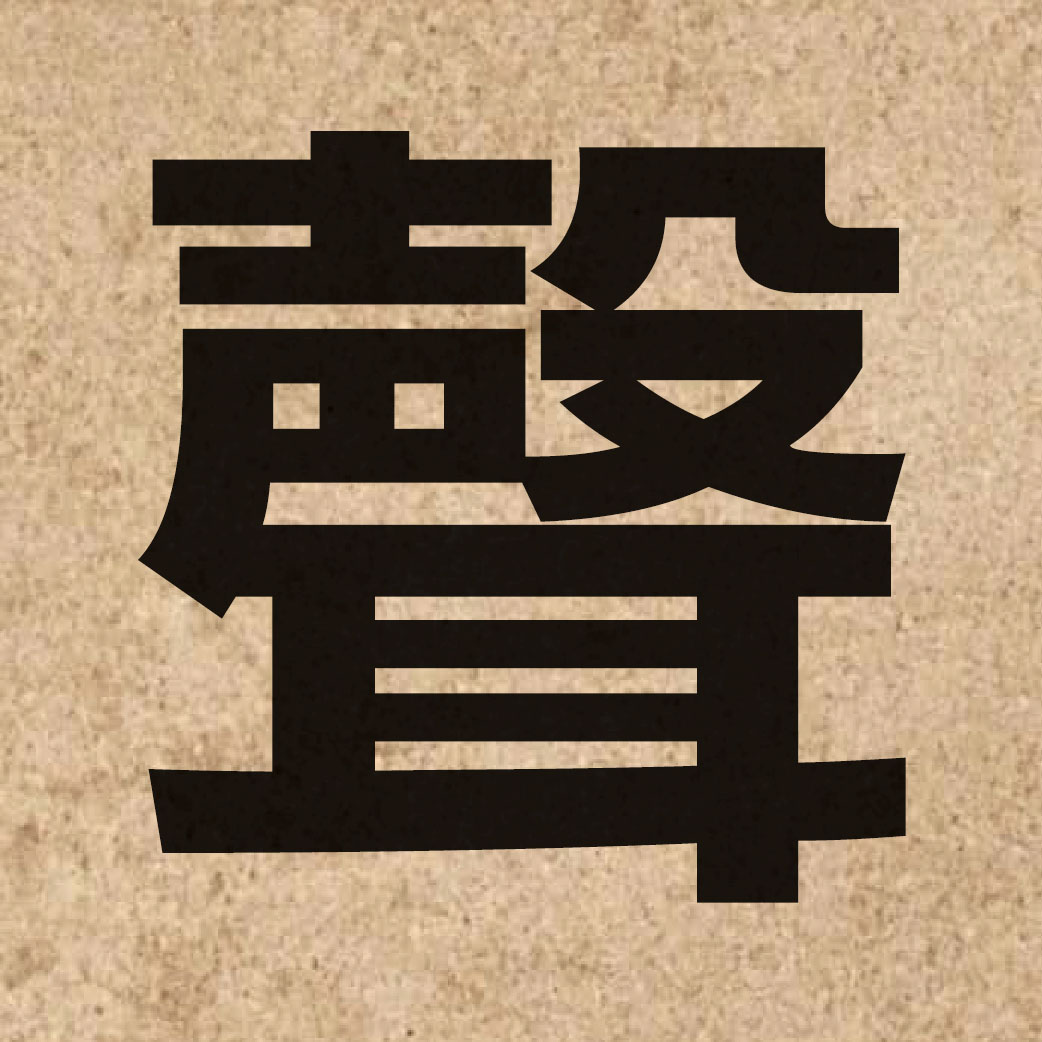
The Chinese character【聲】is used to describe hearing or reputation, and is mainly used for the following meanings:
Voice, reputation. Explanation: (1) Sound waves that can cause hearing due to the impact or friction of objects. Such as: “laughter”, “sound”, “thunder”, “wind”, “sound waves”. (2) Music. Such as: “sound and light”, “vocal music”. (3) Reputation. Such as: “political reputation”, “name”, “reputation”, “fame”, “renown”. (4) Make a sound. For example: “silently.” (5) To announce or publicize. Such as: “denounce”, “statement”, “claim”, “state”. (6) Tone. Such as: “level tone”, “rising tone”, “falling tone”, “entering tone”. (7) Quantifier. A unit used to count the number of utterances. For example: “a loud shout”, “three cries of helplessness”.
Here is the phonetic guide for pronouncing this Chinese character.
Mandarin Pinyin of 【聲】:shēng
Cantonese Jyutping of 【聲】:seng1
Here is an explanation of the primary details of the Chinese character 【聲】︰
Here are some situations where you can use【聲】, for example:Describes hearing or reputation , It means mainly voice, reputation .The richness of Chinese characters allows for a wide range of meanings, some of which may be too complex to be fully explained here.
【聲】stands alone as a word, yet when paired with others, it leads to complex linguistic structures, for instance【聲音、聲望】(Mandarin Pinyin:shēng yīn 、shēng wàng/ Cantonese Jyutping:seng1 jam1 、seng1 mong6)
Writing this character requires 17 strokes,It is a highly common and fundamental Chinese character that must be learned,Here’s an example showing how this character can be effectively used.:
她的聲音十分動聽,令人難忘。
Her voice is very beautiful and unforgettable.
Wishing you a wonderful journey in embracing Chinese and expanding your knowledge. There’s more information for you to explore leisurely.