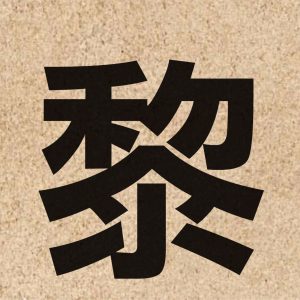
The Chinese word【齋】that we will introduce this time is a word that describes religion or life. It is mainly used for the following meanings:
Fasting or quietness. Explanation: (1) Bathing and eating vegetarian food before worship to cleanse the body and mind to show sincerity. For example: “fasting”. (2) Vegetarian food eaten by Buddhists and Taoists. For example: “eat vegetarian food”. (3) Giving food to monks and nuns. For example: “feeding monks”. (4) The name of a study, school or shop. Such as: “study”.
Here is the pronunciation of this Chinese character.
Mandarin Pinyin of 【齋】:zhāi
Cantonese Jyutping of 【齋】:zaai1
Here is an explanation of the primary details of the Chinese character 【齋】︰
Here are some situations where you can use【齋】, for example:Describing religion or life , It means mainly fasting or quietude .The richness and complexity of Chinese characters enable various interpretations, some of which may exceed what is presented here.
【齋】stands alone as a word, yet when paired with others, it leads to complex linguistic structures, for instance【齋飯、齋戒】(Mandarin Pinyin:zhāi fàn 、zhāi jiè/ Cantonese Jyutping:zaai1 faan6 、zaai1 gaai3)
Writing this character requires 17 strokes,It is a Chinese character that, once mastered, allows for a deeper understanding and more diverse expression in communication,The sentence below shows how this character appears in written language.:
他遵守齋戒,表達對神明的敬意。
He observed the fast to show respect to the gods.
I trust you’ll have a rewarding experience exploring Chinese and expanding your insights. Take your time to browse through the information provided.