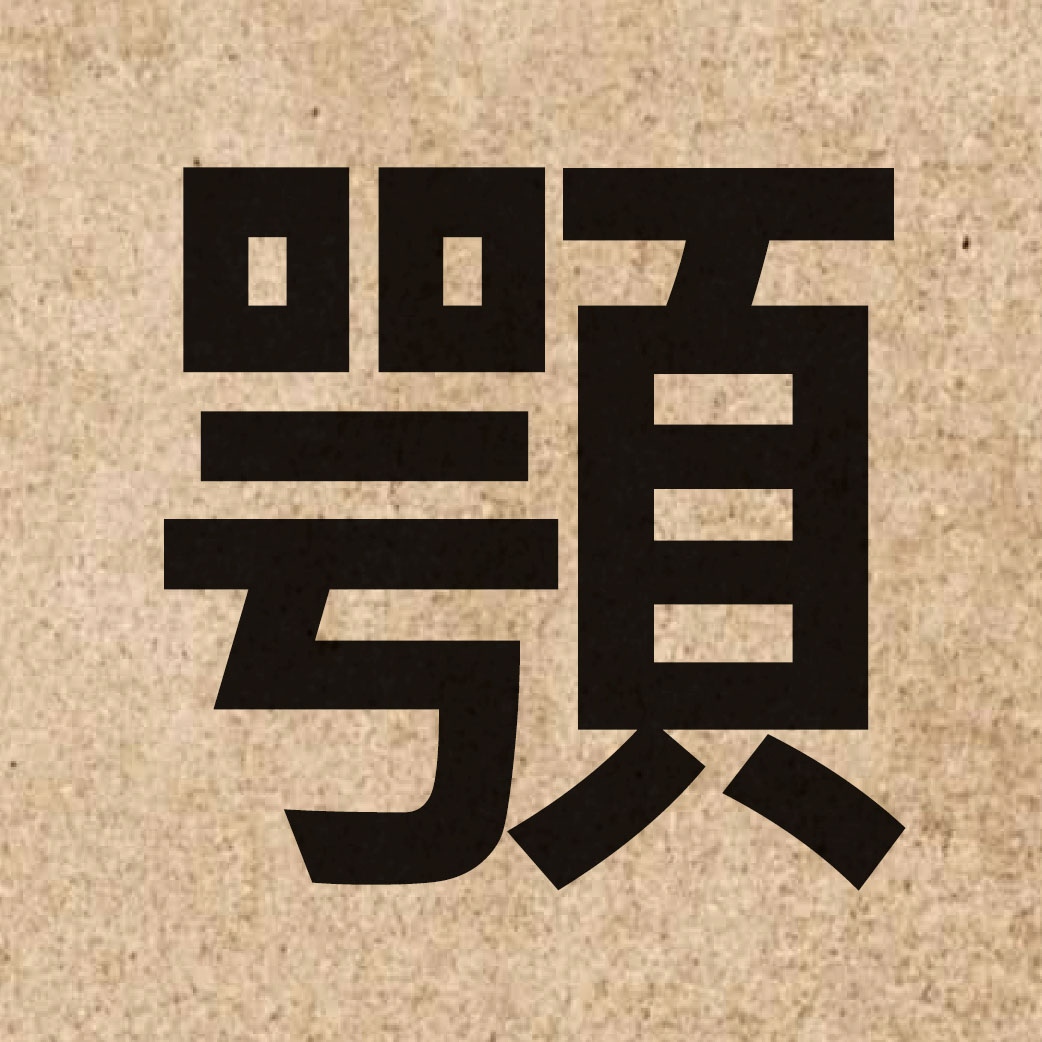
The Chinese character【顎】is a word that describes the body or structure, and is mainly used for the following meanings:
Upper or lower jaw. Explanation: Bones of the upper and lower walls of the mouth. It includes the upper jaw and the lower jaw that can open and close. For example: “soft palate”, “hard palate”, “cleft palate”.
Here is the phonetic guide for pronouncing this Chinese character.
Mandarin Pinyin of 【顎】:è
Cantonese Jyutping of 【顎】:ngok6
This section presents general background information on the Chinese character 【顎】︰
Here are some situations where you can use【顎】, for example:Describe the body or structure , It means mainly the upper or lower jaw .Since Chinese characters have profound meanings, they may carry additional complexities and specific usages that are difficult to fully convey here.
【顎】exists independently, yet its interaction with other words enriches expressions, such as【上顎、下顎】(Mandarin Pinyin:shàng è 、xià è/ Cantonese Jyutping:soeng5 ngok6 、haa6 ngok6)
It takes 18 strokes to write this character,Its usage is more restrictive, making it an advanced-level Chinese character that one only needs to learn when seeking to challenge their own abilities,Here’s a practical example using this character.:
他因牙齒問題需要檢查下顎的健康。
He needed to check the health of his jaw due to dental problems.
I hope you can appreciate and enjoy the beauty of Chinese, while gaining more knowledge here. Take your time exploring the information available.