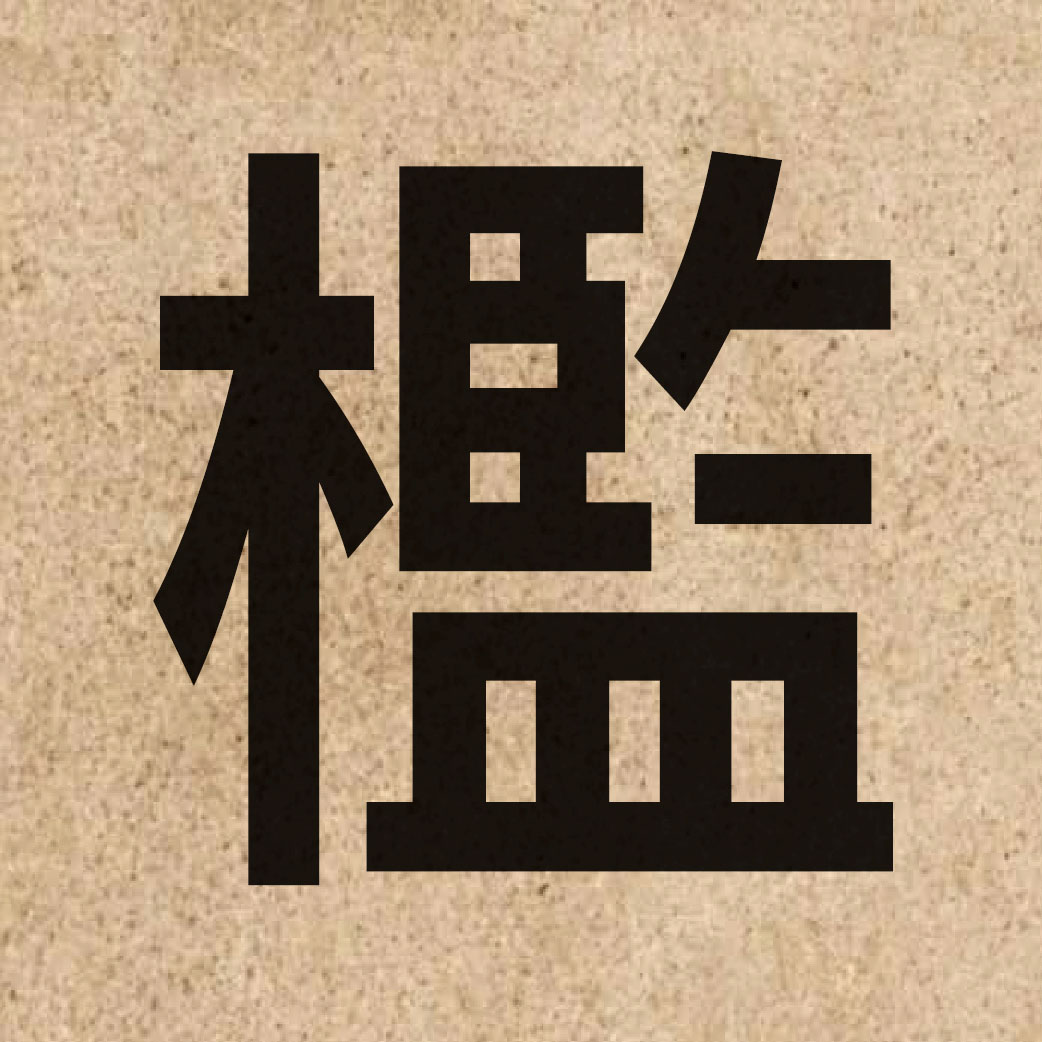
The Chinese character【檻】is used to describe buildings or boundaries, and is mainly used for the following meanings:
Threshold or boundary. Explanation: 1. The horizontal bar under the door frame. For example: “threshold”. 2. A fence to keep out wild animals. Such as: “animal cage”, “cow cage”.
Here is the phonetic guide for pronouncing this Chinese character.
Mandarin Pinyin of 【檻】:kǎn
Cantonese Jyutping of 【檻】:laam6
This section covers the key information related to the character 【檻】︰
Here are some situations where you can use【檻】, for example:Describe a building or boundary , It means mainly a threshold or boundary .Given the broad and profound nature of Chinese characters, some nuances and precise usages may not be entirely captured in this space.
【檻】can be used alone, but when combined with other words, it forms richer expressions, such as【門檻、閾檻】(Mandarin Pinyin:mén kǎn 、yù kǎn/ Cantonese Jyutping:mun4 haam5 、wik6 haam5)
There are exactly 18 strokes in this character,It is a Chinese character that must be learned by those aiming to reach a near-native level of proficiency in Chinese,Listed below is a sentence demonstrating the application of this character.:
他小心地跨過門檻進入房間。
He stepped carefully across the threshold into the room.
I hope you find delight in the richness of the Chinese language and learn new things here. Take your time going through the materials provided.