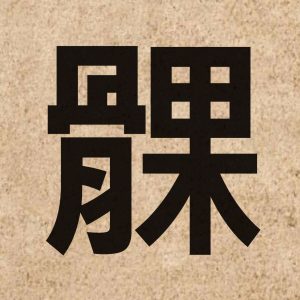
The Chinese character【髑】that we will explain today is a word that describes anatomy or morphology. It is mainly used for the following meanings:
Bones or skull.
Below is the correct pronunciation of this particular Chinese character.
Mandarin Pinyin of 【髑】:dú
Cantonese Jyutping of 【髑】:duk6
Here, you can find an overview of the character 【髑】︰
Here are some situations where you can use【髑】, for example:Describing anatomy or morphology , It means mainly bones or skulls .The richness and complexity of Chinese characters enable various interpretations, some of which may exceed what is presented here.
【髑】is a single word that enhances clarity and specificity when matched with others, for example【髑髏、頭髑】(Mandarin Pinyin:dú lóu 、tóu dú/ Cantonese Jyutping:duk6 lau4 、tau4 duk6)
This character is made up of 23 strokes,It is a highly difficult Chinese character that is rarely used in daily life and has a lower frequency of usage,Below, you’ll find a sentence connected to this character.:
古墓中發現了一具完整的髑髏。
complete skull was found in the ancient tomb.
I trust you’ll have a rewarding experience exploring Chinese and expanding your insights. Take your time to browse through the information provided.