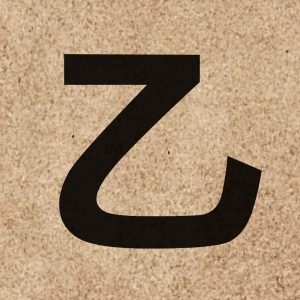
The Chinese character “一” is incredibly versatile and holds various meanings depending on the context.
Mandarin Pinyin: yī
Cantonese Jyutping: jat1
Here’s a detailed explanation of its different uses:
- The First Natural Number: “一” represents the first natural number. In uppercase, it is written as 「壹」, and in Arabic numerals, it is “1”.
- Single or Not Multiple: It denotes something singular or not in plurality, such as 「一個」 (one), 「一張紙」 (one sheet of paper).
- Same or Identical: “一” can mean something that is the same or identical, like 「一模一樣」 (exactly the same) and 「大小不一」 (different sizes).
- Focused and Pure: It signifies focus and purity, as in 「一心一意」 (wholeheartedly) and 「用情專一」 (faithful).
- Whole, Full, Entire: This usage indicates completeness, such as 「一身臭汗」 (covered in sweat) and 「一生一世」 (a lifetime).
- Each: “一” can mean each or every, for example, 「一班四十人」 (a class of forty students) and 「一頁六百字」 (six hundred characters per page).
- Just or Recently: It can also mean just or recently, as in 「一聽就懂」 (understand immediately) and 「天一亮,他便起床。」 (he gets up as soon as it gets light).
- Slightly or Try: When placed between two repeated verbs, it indicates a slight action or attempt, such as 「動一動」 (move a bit) and 「問一問」 (ask a bit).
- Another Name: “一” can also mean another name, like in 「蟬,一名知了。」 (cicada, also known as zhiliao).
Additionally, the pronunciation of “一” changes depending on its position in a sentence.
When used alone or at the end of a phrase, it is pronounced with a high-level tone. Before a falling tone, it is pronounced with a rising tone. Before high-level, rising, or dipping tones, it is pronounced with a falling tone.