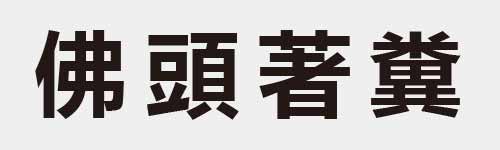
Learning Chinese grows from characters to words and then idioms. We’ve created free tools to help you master idioms like 「佛頭著糞」, explained here.
Introducing the idiom 「佛頭著糞」: its meaning and how to use it are provided below.
Place: place. Originally it refers to the Buddha’s benevolent nature, who would not mind even if dung was dropped on his head. Later it is often used to describe putting bad things on top of good things, thus tainting the good things.
The Mandarin pronunciation of this idiom is :
fó tóu zhe fèn
while its Cantonese pinyin is :
fat6 tau4 jeuk3/jeuk6 fan3
With so many Chinese idioms, each holding diverse meanings and uses, there is much to explore. These materials are designed to support your Chinese language studies.