

We’ve created free resources to teach you Chinese. This series focuses on idioms and proverbs, known for their richness and versatility. Check out 「孤陋寡聞」 and…
View More Quick and simple insights into 「孤陋寡聞」, with pinyin in Mandarin and Cantonese for easy comparison.
Start learning Chinese for free! Let’s discuss the core idiom 「孤家寡人」 and how to apply it.
Your free Chinese learning resource is here! This idiom and proverb series introduces phrases rich in meaning. Today, we explain 「孤家寡人」 and its usage. The…
View More Start learning Chinese for free! Let’s discuss the core idiom 「孤家寡人」 and how to apply it.
Study Chinese without cost! Idioms and sayings are at its heart. Here’s the meaning and use of 「孤恩負義」.
We strive to offer you free Chinese learning resources. This series focuses on idioms and proverbs, which are rich in meaning and can be used…
View More Study Chinese without cost! Idioms and sayings are at its heart. Here’s the meaning and use of 「孤恩負義」.
Studying idioms makes your Chinese stronger. Today, we discuss: 「孤豚腐鼠」.
After learning basic characters, the next level in Chinese is combining them into words, and then idioms. This free guide helps you understand advanced idioms…
View More Studying idioms makes your Chinese stronger. Today, we discuss: 「孤豚腐鼠」.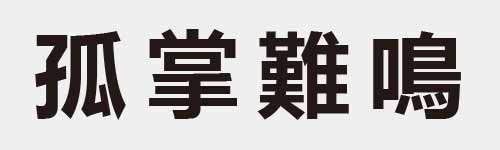
Take your Chinese to new heights with idioms. Our current focus is: 「孤掌難鳴」.
Character combinations make words; words evolve into idioms. Learn 「孤掌難鳴」 today with this free Chinese resource. Here is the Chinese idiom 「孤掌難鳴」, along with its…
View More Take your Chinese to new heights with idioms. Our current focus is: 「孤掌難鳴」.
This explanation simplifies 「孤雲野鶴」 for you, with its meaning, usage, and Mandarin/Cantonese pinyin.
Chinese begins with basics like characters, builds up to words, and reaches idioms. This free resource introduces advanced idioms like 「孤雲野鶴」, with details below. For…
View More This explanation simplifies 「孤雲野鶴」 for you, with its meaning, usage, and Mandarin/Cantonese pinyin.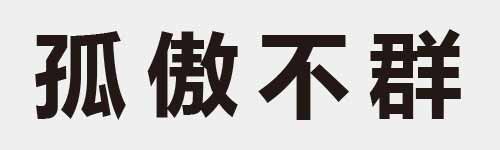
Understand 「孤傲不群」 easily with its usage and meanings, and compare the Mandarin/Cantonese pinyin.
Chinese education begins with characters, continues with phrases, and grows into idioms. This free lesson covers the idiom 「孤傲不群」. Learn its usage below. Let us…
View More Understand 「孤傲不群」 easily with its usage and meanings, and compare the Mandarin/Cantonese pinyin.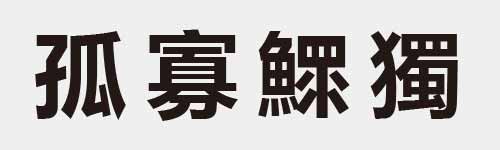
Understand the meaning and usage of 「孤寡鰥獨」 with a concise guide and pinyin in both Mandarin and Cantonese.
Chinese idioms like 「孤寡鰥獨」 represent a high level of language skill. This free guide helps you learn their meaning and use. This time, our spotlight…
View More Understand the meaning and usage of 「孤寡鰥獨」 with a concise guide and pinyin in both Mandarin and Cantonese.
Understand the usage and meaning of 「孤雌寡鶴」 with pinyin in Mandarin and Cantonese included.
Chinese language progresses from characters to idioms. This free guide explains the advanced idiom 「孤雌寡鶴」 for better learning. The idiom being introduced now is 「孤雌寡鶴」.…
View More Understand the usage and meaning of 「孤雌寡鶴」 with pinyin in Mandarin and Cantonese included.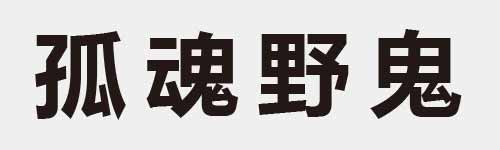
Understanding idioms improves Chinese language proficiency. Today’s idiom: 「孤魂野鬼」.
Chinese learners move from characters to idioms as the highest level. This free resource explains 「孤魂野鬼」 below. In this introduction, we explore the idiom 「孤魂野鬼」.…
View More Understanding idioms improves Chinese language proficiency. Today’s idiom: 「孤魂野鬼」.