
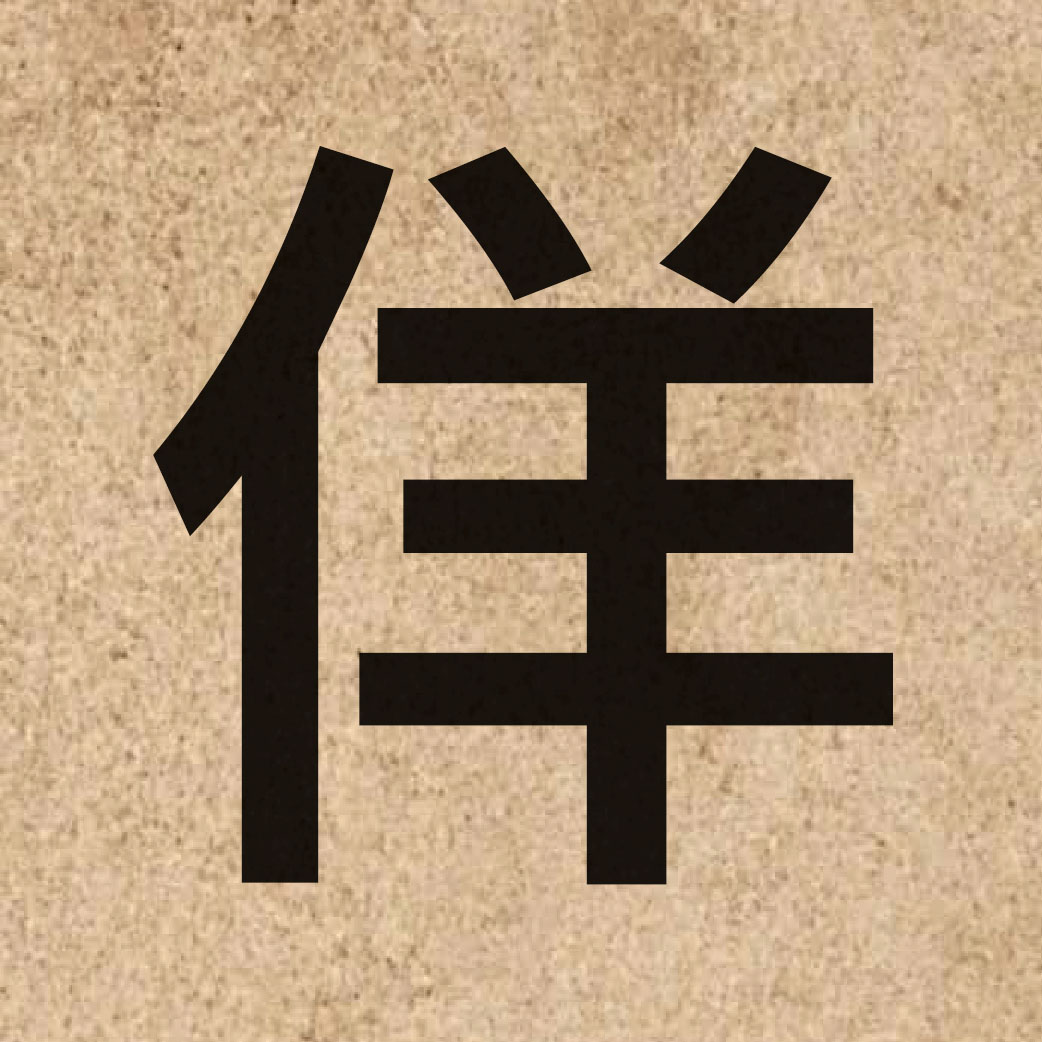
The Chinese character【佯】is a word that describes an action or a state, and is mainly used for the following meanings:
To pretend or disguise. Explanation: (1) Deciduous tree. It blooms pale yellow flowers in summer. The wood can be used for construction, making utensils, and making musical instruments. (2) A metaphor for hometown. Such as: “hometown”, “zili”. (3) To print: to carve the text on a wooden board and publish it as a book. For example: “His novel has been published.” (4) Xian Qiao Zi: to refer to someone’s father or son in a complimenting way.
You can refer to this for the pronunciation of the mentioned Chinese character.
Mandarin Pinyin of 【佯】:yáng
Cantonese Jyutping of 【佯】:joeng4
Here’s a brief introduction to the basic aspects of the character 【佯】︰
Here are some situations where you can use【佯】, for example:Describe an action or state , It means primarily to pretend or disguise .As Chinese characters hold complex and sophisticated meanings, certain aspects may be too detailed to fully articulate in this explanation.
【佯】is a fundamental term that integrates with others to create meaningful expressions, such as【佯裝、佯笑】(Mandarin Pinyin:yáng zhuāng 、yáng xiào/ Cantonese Jyutping:joeng4 zong1 、joeng4 siu3)
The number of strokes required for this character is 8 ,It is a Chinese character that must be learned by those aiming to reach a near-native level of proficiency in Chinese,Here’s a sample sentence featuring this character.:
他佯裝鎮定以掩飾內心的不安。
He feigned calm to conceal his inner uneasiness.
Hoping that you’ll be captivated by Chinese and gain valuable knowledge here. There’s plenty for you to explore—take your time!
