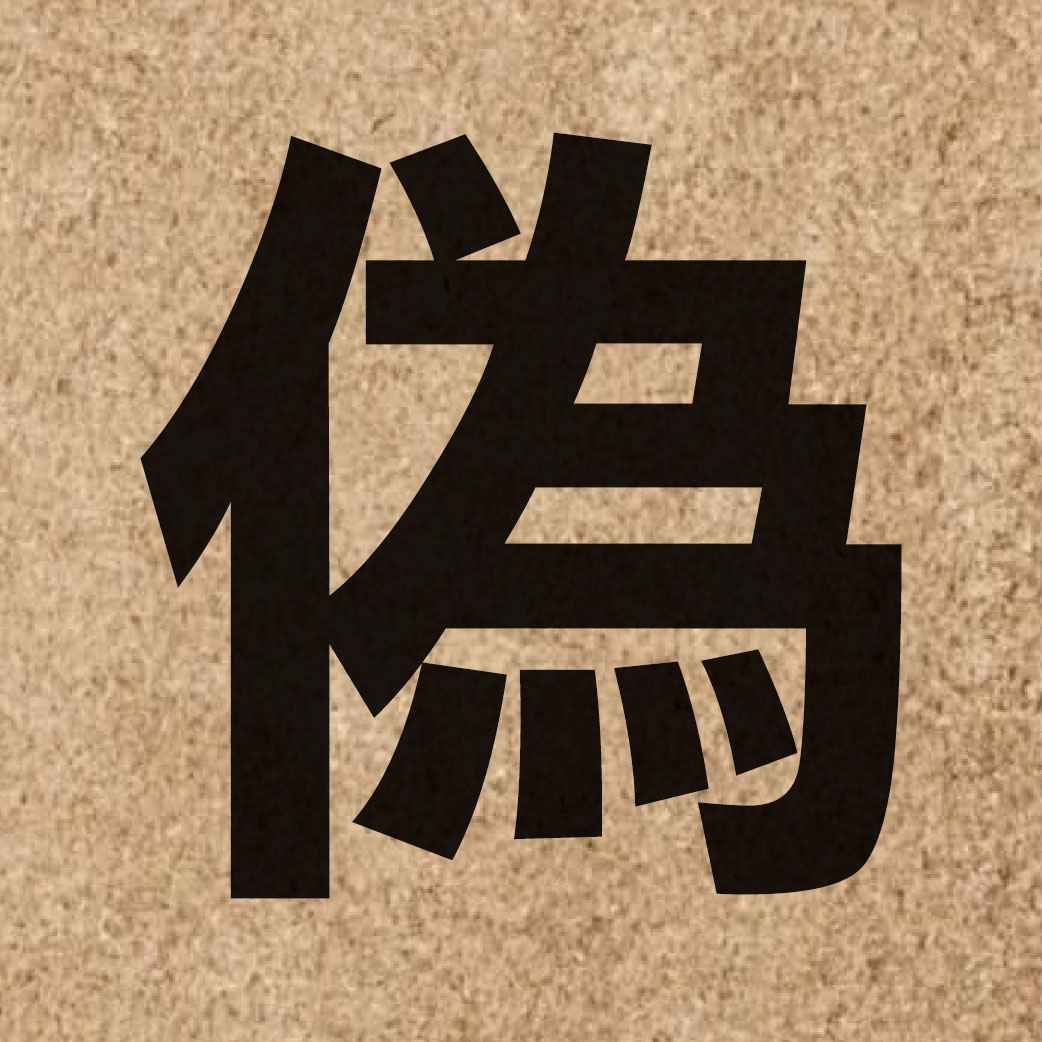
The Chinese word【偽】that we will introduce this time is a word that describes an action or a state. It is mainly used for the following meanings:
Forged or false. Explanation: (1) False. Such as: “disguise”, “counterfeit money”, “forged documents”. (2) Illegal. Such as: “fake regime”, “fake government”, “fake Manchukuo”.
The pronunciation of this specific Chinese character is given below.
Mandarin Pinyin of 【偽】:wěi
Cantonese Jyutping of 【偽】:ngai6
Here’s a brief introduction to the basic aspects of the character 【偽】︰
Here are some situations where you can use【偽】, for example:Describe an action or state , It means mainly fake or false .Because of the extensive meanings of Chinese characters, some intricate details and specialized uses might not be fully presented here.
【偽】is a fundamental term that integrates with others to create meaningful expressions, such as【偽裝、偽善】(Mandarin Pinyin:wěi zhuāng 、wěi shàn/ Cantonese Jyutping:ngai6 zong1 、ngai6 sin6)
The number of strokes required for this character is 11 ,It is a more advanced Chinese character that is essential for daily use,Provided below is a sentence illustrating this character in context.:
他試圖用偽造的文件蒙混過關。
He tried to get away with it by using forged documents.
Wishing you a wonderful learning experience with Chinese, where you can expand your understanding. There’s plenty to discover, so browse freely.