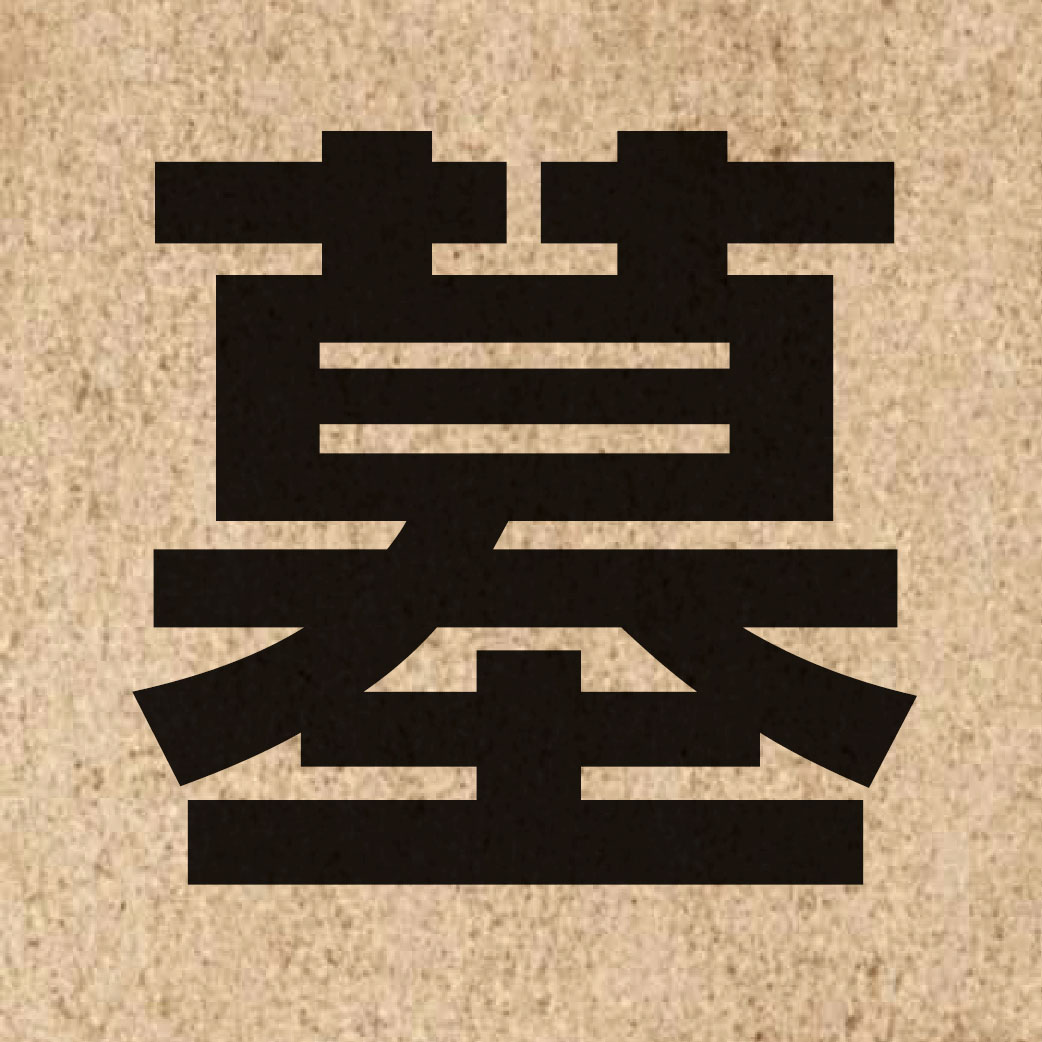
The Chinese character【墓】that I will teach you this time is a word that describes a place or a symbol. It is mainly used for the following meanings:
A grave or burial place. Explanation: The place where people are buried after death. Such as: “cemetery”, “grave”, “ancient tomb”, “graveyard”, “cemetery”.
Here is the phonetic guide for pronouncing this Chinese character.
Mandarin Pinyin of 【墓】:mù
Cantonese Jyutping of 【墓】:mou6
Below is an introduction to the basics of the Chinese character 【墓】︰
Here are some situations where you can use【墓】, for example:Describe a place or symbol , It means primarily a grave or burial place..Given the broad interpretative scope of Chinese characters, certain deeper meanings and unique applications may be beyond this explanation.
【墓】functions as a standalone word but can pair with others to form more descriptive expressions, like【墳墓、墓地】(Mandarin Pinyin:fén mù 、mù dì/ Cantonese Jyutping:fan4 mou6 、mou6 dei6)
The stroke count for this character is 14 ,It is a Chinese character that, once mastered, allows for a deeper understanding and more diverse expression in communication,This sentence serves as an example of how to use this character.:
他們為祖先修建了一個整潔的墓地。
They built a neat cemetery for their ancestors.
I hope you enjoy the richness of the Chinese language and gain new insights while browsing. Take your time to explore the details.