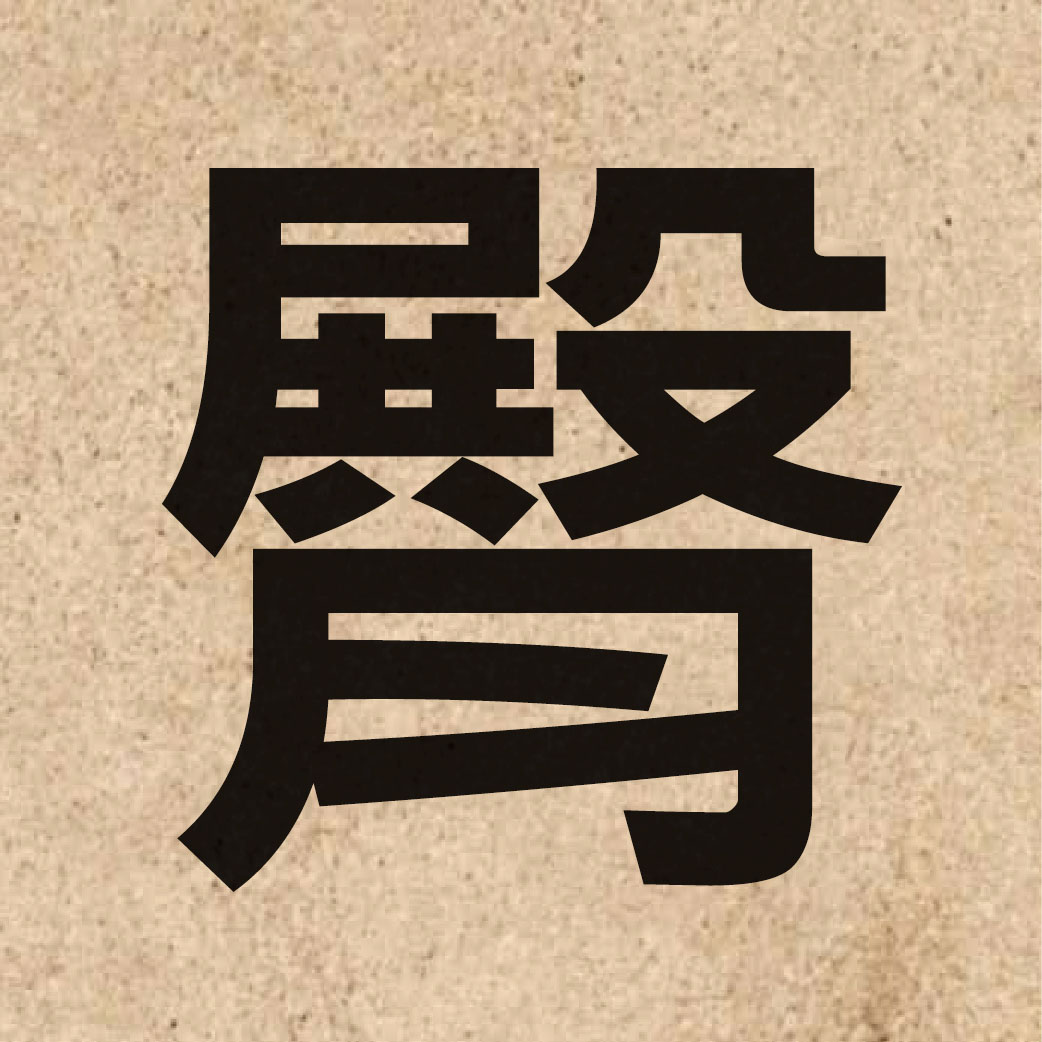
The Chinese character【臀】that we will explain today is a word that describes the body or shape. It is mainly used for the following meanings:
Buttocks or lower limbs. Explanation: The part where the upper ends of the legs of a person or four-limbed animal connect to the waist. Also called “butt”. Such as: “hips”, “twisting waist and hips”.
The pronunciation of this specific Chinese character is given below.
Mandarin Pinyin of 【臀】:tún
Cantonese Jyutping of 【臀】:tyun4
Here’s an overview of the essential details about the character 【臀】︰
Here are some situations where you can use【臀】, for example:Describing body or shape , It means mainly the buttocks or lower limbs .Because of the extensive meanings of Chinese characters, some intricate details and specialized uses might not be fully presented here.
【臀】is an individual word that merges with others to generate specific phrases, for example【臀部、翹臀】(Mandarin Pinyin:tún bù 、qiào tún/ Cantonese Jyutping:tyun4 bou6 、kiu4 tyun4)
This character is written with 17 strokes,Its usage is more restrictive, making it an advanced-level Chinese character that one only needs to learn when seeking to challenge their own abilities,Below is a sample sentence featuring this character in real usage.:
他因臀部受傷而需要休養。
He needed to rest due to a hip injury.
Wishing you a wonderful learning experience with Chinese, where you can expand your understanding. There’s plenty to discover, so browse freely.