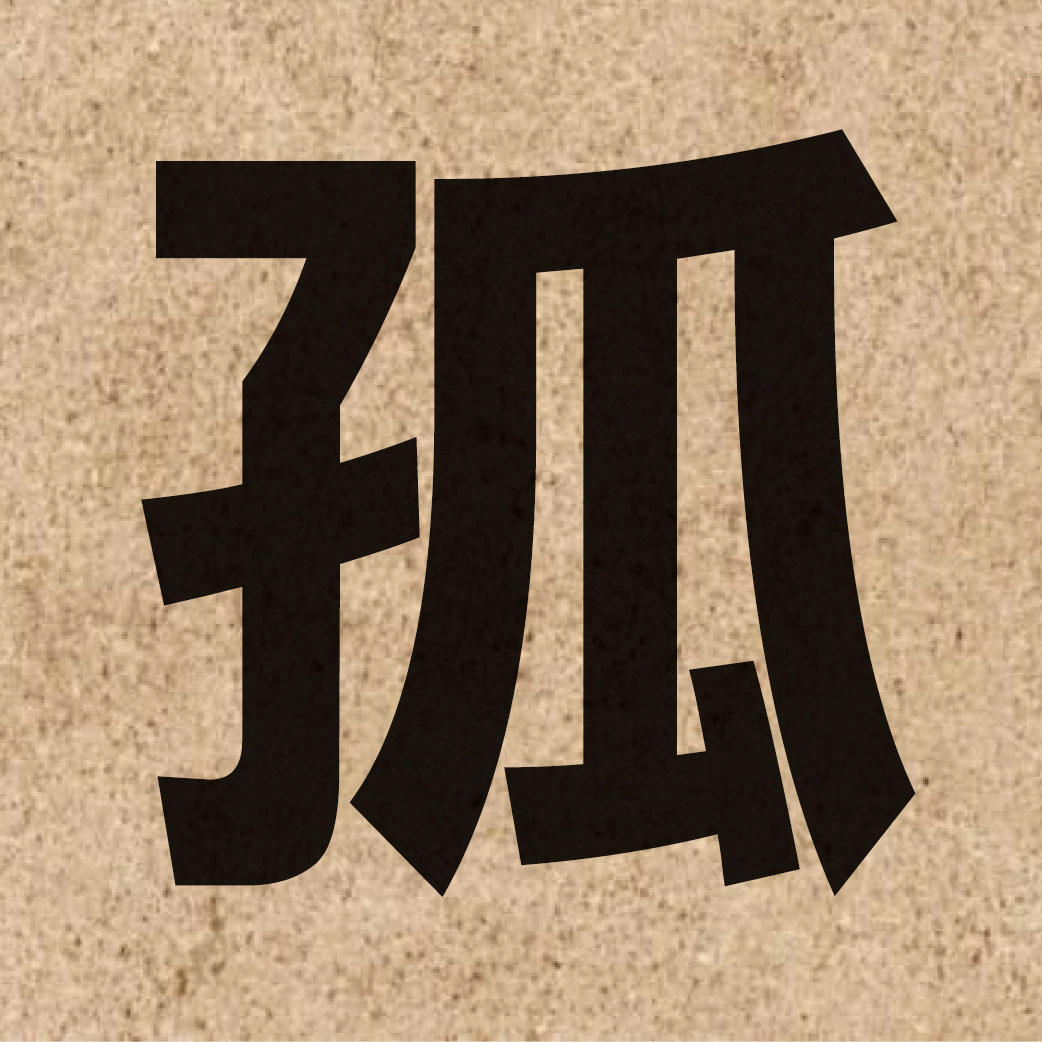
The Chinese word【孤】that we will introduce this time is a word that describes a state or identity. It is mainly used for the following meanings:
Lonely, orphan. Explanation: (1) In ancient times, it referred to a fatherless child. Nowadays, it mostly refers to a child who has neither parents. Such as: “orphan”, “orphan boy”, “orphan girl”, “entrusted orphan”. (2) Alone and lonely. Such as: “lonely”, “solitary”, “alone”, “all alone”, “one cannot do anything alone”. (3) Having a strange temperament. Such as: “eccentric”, “arrogant”. (4) The self-proclaimed title of ancient kings and princes. For example: “The Lonely King”.
This section provides the pronunciation of the Chinese character.
Mandarin Pinyin of 【孤】:gū
Cantonese Jyutping of 【孤】:gu1
This section presents general background information on the Chinese character 【孤】︰
Here are some situations where you can use【孤】, for example:Describing status or identity , It means mainly loneliness, orphan .Since Chinese characters have profound meanings, they may carry additional complexities and specific usages that are difficult to fully convey here.
【孤】exists independently, yet its interaction with other words enriches expressions, such as【孤獨、孤單】(Mandarin Pinyin:gū dú 、gū dān/ Cantonese Jyutping:gu1 duk6 、gu1 daan1)
It takes 8 strokes to write this character,It is a more advanced Chinese character that is essential for daily use,Below is an example sentence related to this character.:
他因為孤獨而變得十分內向。
He became very introverted because of loneliness.
I hope you can appreciate and enjoy the beauty of Chinese, while gaining more knowledge here. Take your time exploring the information available.