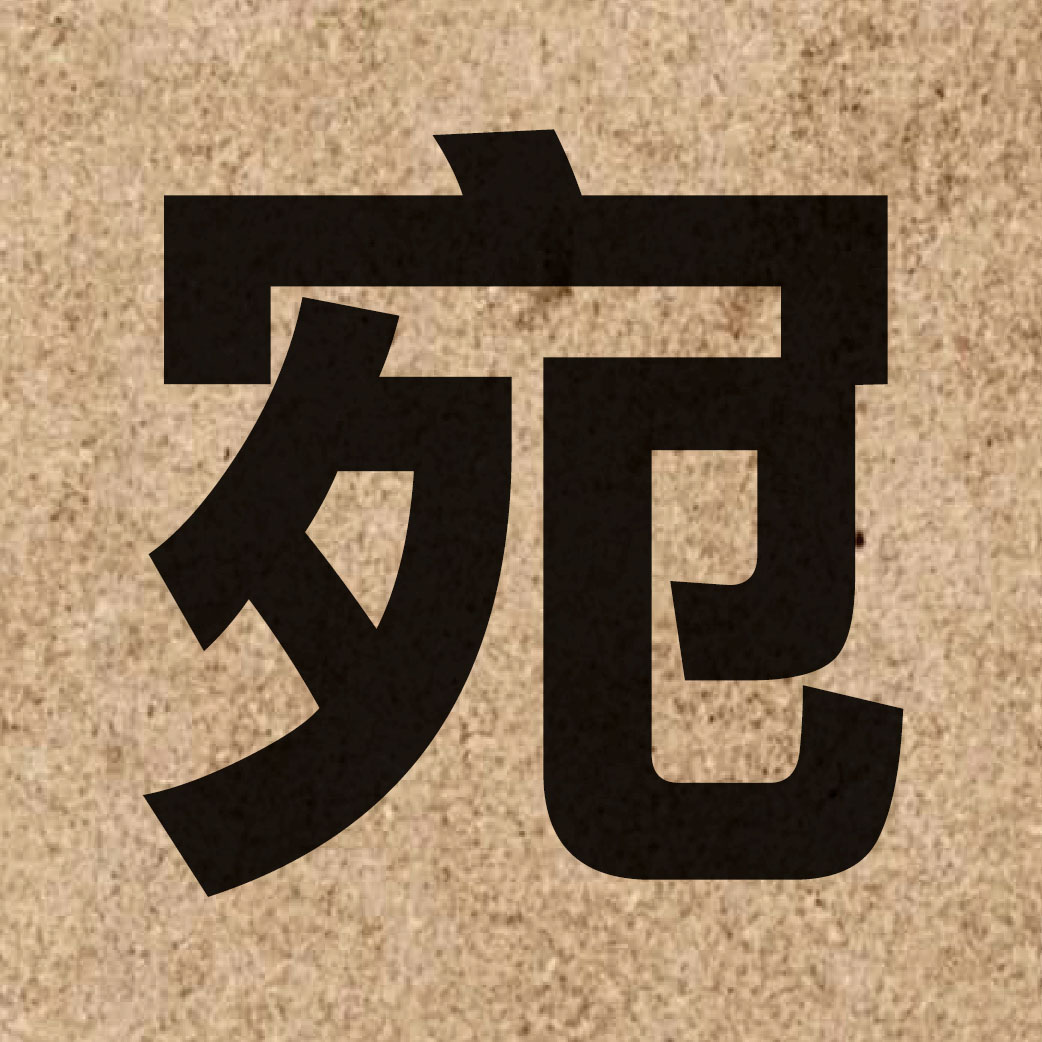
The Chinese character【宛】that I will teach you today is used in literary descriptions or place names. It is mainly used for the following meanings:
Bend, seem.
You can refer to this for the pronunciation of the mentioned Chinese character.
Mandarin Pinyin of 【宛】:wǎn
Cantonese Jyutping of 【宛】:jyun2
Below is an introduction to the basics of the Chinese character 【宛】︰
Here are some situations where you can use【宛】, for example:Used in literary descriptions or place names , It means mainly to bend, to seem .Given the broad and profound nature of Chinese characters, some nuances and precise usages may not be entirely captured in this space.
【宛】functions as a standalone word but can pair with others to form more descriptive expressions, like【宛如、宛轉】(Mandarin Pinyin:wǎn rú 、wǎn zhuǎn/ Cantonese Jyutping:jyun2 jyu4 、jyun2 zyun2)
The stroke count for this character is 8 ,It is a Chinese character that must be learned by those aiming to reach a near-native level of proficiency in Chinese,This sentence serves as an example of how to use this character.:
小路宛然延伸至深山之中。
The path seems to extend deep into the mountains.
I hope you find delight in the richness of the Chinese language and learn new things here. Take your time going through the materials provided.