
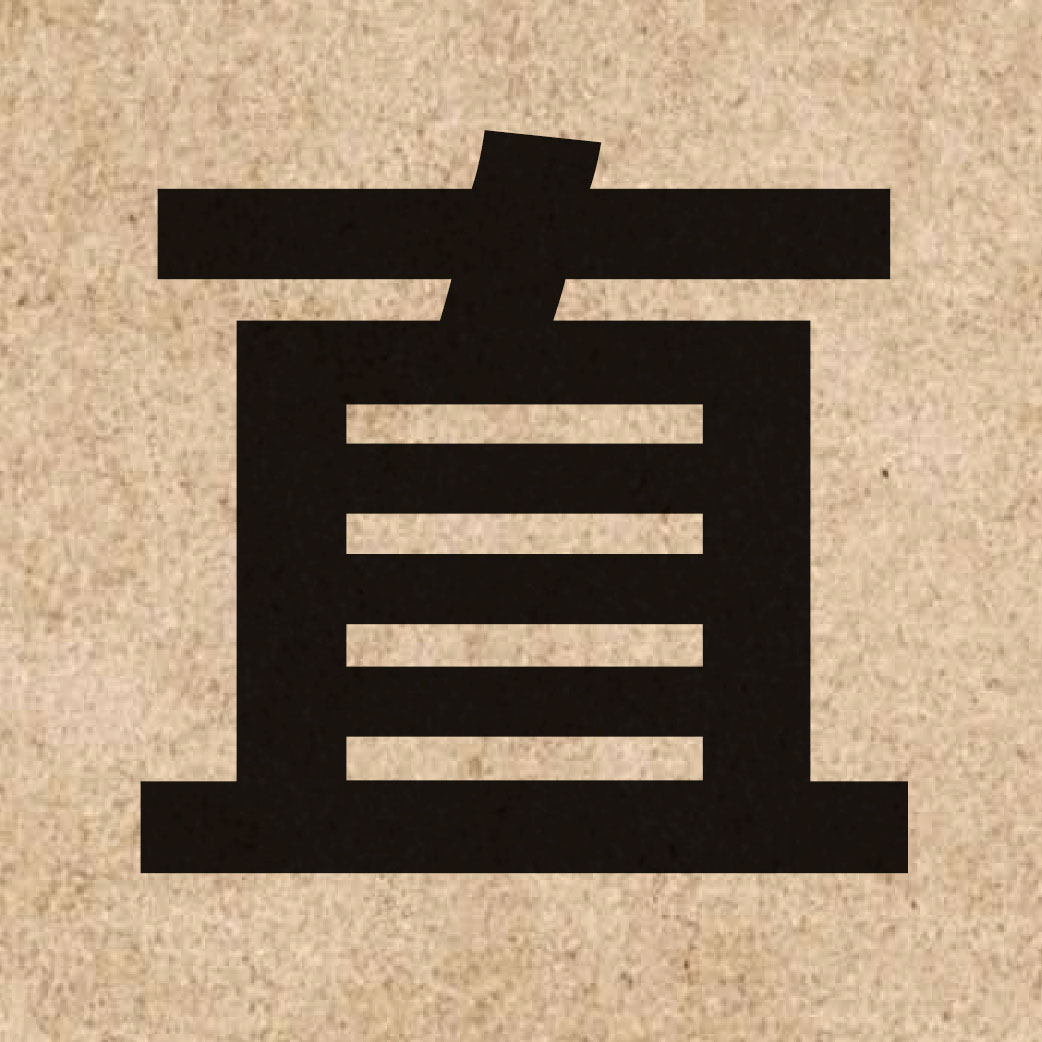
The Chinese character【直】that we will talk about today is a character that describes shape or character. It is mainly used for the following meanings:
Straight or frank. Explanation: (1) Not bent. For example: “straight line”, “straight”, “diameter”, “straight and upright”. (2) Vertical, from top to bottom. Opposite of horizontal. For example: “helicopter”, “straight writing”. (3) Fair, impartial and reasonable. Such as: “straight path”, “uprightness”, “right and wrong”, “righteous and confident”. (4) Simple, unpretentious, frank and straightforward. Such as: “frank”, “straightforward”, “candid”, “straightforward”, “straightforward”. (5) Without turns or obstructions. For example: “directly through”, “train directly to Taichung.” (6) Dull and rigid. For example: “My eyes were wide open”, “My legs were so cold that they were straight!” (7) Continuous. For example: “He kept smiling at me!”, “I didn’t see him coming until the get out of class was over.”
Below is the correct pronunciation of this particular Chinese character.
Mandarin Pinyin of 【直】:zhí
Cantonese Jyutping of 【直】:zik6
Below, I will share fundamental aspects of the meaning and usage of the character 【直】︰
Here are some situations where you can use【直】, for example:Describe shape or character , It means mainly straight or frank .The elaborate meanings of Chinese characters allow for specialized applications that might not be fully expressed here.
【直】is a simple word when used alone, but its meaning broadens when combined with others to form intricate phrases, like【直線、直率】(Mandarin Pinyin:zhí xiàn 、zhí lǜ/ Cantonese Jyutping:zik6 sin3 、zik6 leot6)
To complete this character, you need 8 strokes,It is a highly common and fundamental Chinese character that must be learned,Below is a sample sentence featuring this character in real usage.:
他的性格直率,從不拐彎抹角。
He is straightforward and never beats around the bush.
May you enjoy the charm of Chinese and develop a broader perspective through learning. You can go through the materials whenever you’d like.
