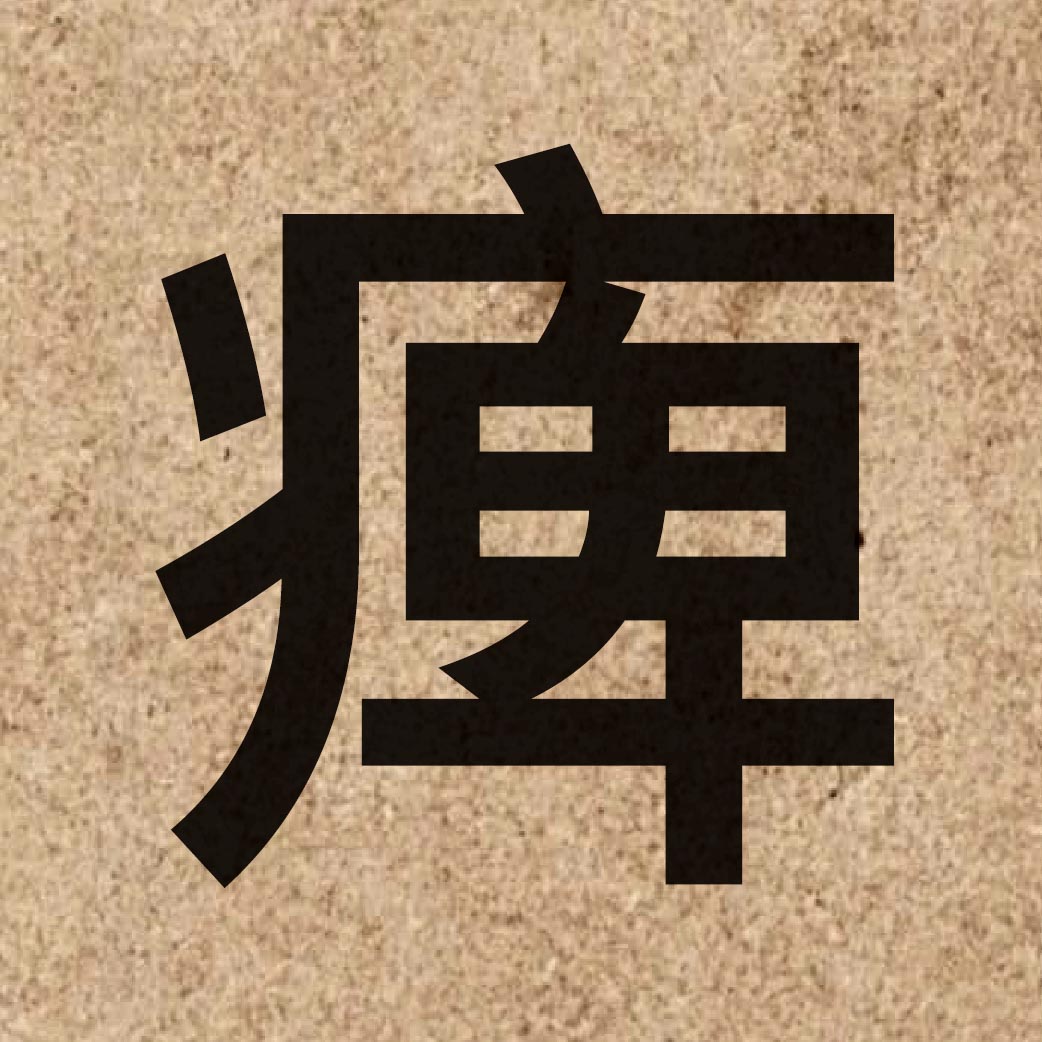
The Chinese character【痺】is a word that describes health or symptoms, and is mainly used for the following meanings:
Paralysis or dysfunction. Explanation: Paralysis: The limbs feel numb or painful and cannot move freely. It is a neurological disease. For example: “polio”.
Here’s the way to say this Chinese character aloud.
Mandarin Pinyin of 【痺】:bì
Cantonese Jyutping of 【痺】:bei3
Here, you can find an overview of the character 【痺】︰
Here are some situations where you can use【痺】, for example:Describe health or symptoms , It means mainly paralysis or dysfunction .Since Chinese characters carry vast meanings, some subtle aspects and specific applications might not be fully detailed in this explanation.
【痺】is a single word that enhances clarity and specificity when matched with others, for example【麻痺、痺痛】(Mandarin Pinyin:má bì 、bì tòng/ Cantonese Jyutping:maa4 bei3 、bei3 tung3)
This character is made up of 13 strokes,Its usage is more restrictive, making it an advanced-level Chinese character that one only needs to learn when seeking to challenge their own abilities,Here’s an example showing how this character can be effectively used.:
長時間保持同一姿勢可能導致痺痛。
Maintaining the same posture for a long time may cause pain.
Hoping that you’ll immerse yourself in the wonders of Chinese and gain meaningful knowledge here. There’s plenty to see, so explore at your convenience.