

The Chinese character【蠍】is a word that describes nature or biology, and is mainly used for the following meanings: An arthropod. Below, you can see how…
View More 蠍: Describes nature or organisms, with limited usage, advanced Chinese characters that you need to learn if you want to challenge yourself (with Cantonese and Mandarin pronunciation)
Build your Chinese expertise by exploring idioms. Here’s today’s: 「蠍蠍螫螫」.
Our goal is to provide you with free Chinese learning tools. This series highlights idioms and proverbs, full of meaning and adaptable to many contexts.…
View More Build your Chinese expertise by exploring idioms. Here’s today’s: 「蠍蠍螫螫」.
Here’s a simple breakdown of 「撩蜂剔蠍」, with pinyin provided for Mandarin and Cantonese.
Chinese learners move from characters to idioms as the highest level. This free resource explains 「撩蜂剔蠍」 below. Introducing the Chinese idiom 「撩蜂剔蠍」: its meaning and…
View More Here’s a simple breakdown of 「撩蜂剔蠍」, with pinyin provided for Mandarin and Cantonese.
A straightforward guide to 「蛇蠍心腸」, including its meaning, application, and Mandarin/Cantonese pinyin.
Chinese learners move from characters to idioms as the highest level. This free resource explains 「蛇蠍心腸」 below. Today, we explore the idiom 「蛇蠍心腸」. Below, we’ll…
View More A straightforward guide to 「蛇蠍心腸」, including its meaning, application, and Mandarin/Cantonese pinyin.
Achieve better Chinese fluency by mastering idioms. This example is: 「蛇蠍為心」.
Chinese learning begins with simple characters, progresses to phrases, and culminates in idioms. This free resource introduces advanced idioms. Today’s focus is 「蛇蠍為心」. Check below…
View More Achieve better Chinese fluency by mastering idioms. This example is: 「蛇蠍為心」.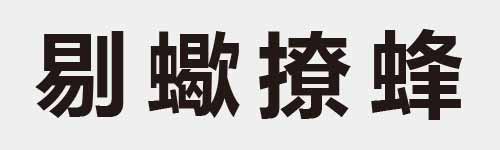
We’re here to explain 「剔蠍撩蜂」 simply, including its meaning, use, and pinyin references.
Progress in Chinese starts with characters, then words, finally idioms. Here’s a free look at 「剔蠍撩蜂」 and its explanation. The Chinese idiom 「剔蠍撩蜂」 we’re introducing…
View More We’re here to explain 「剔蠍撩蜂」 simply, including its meaning, use, and pinyin references.