
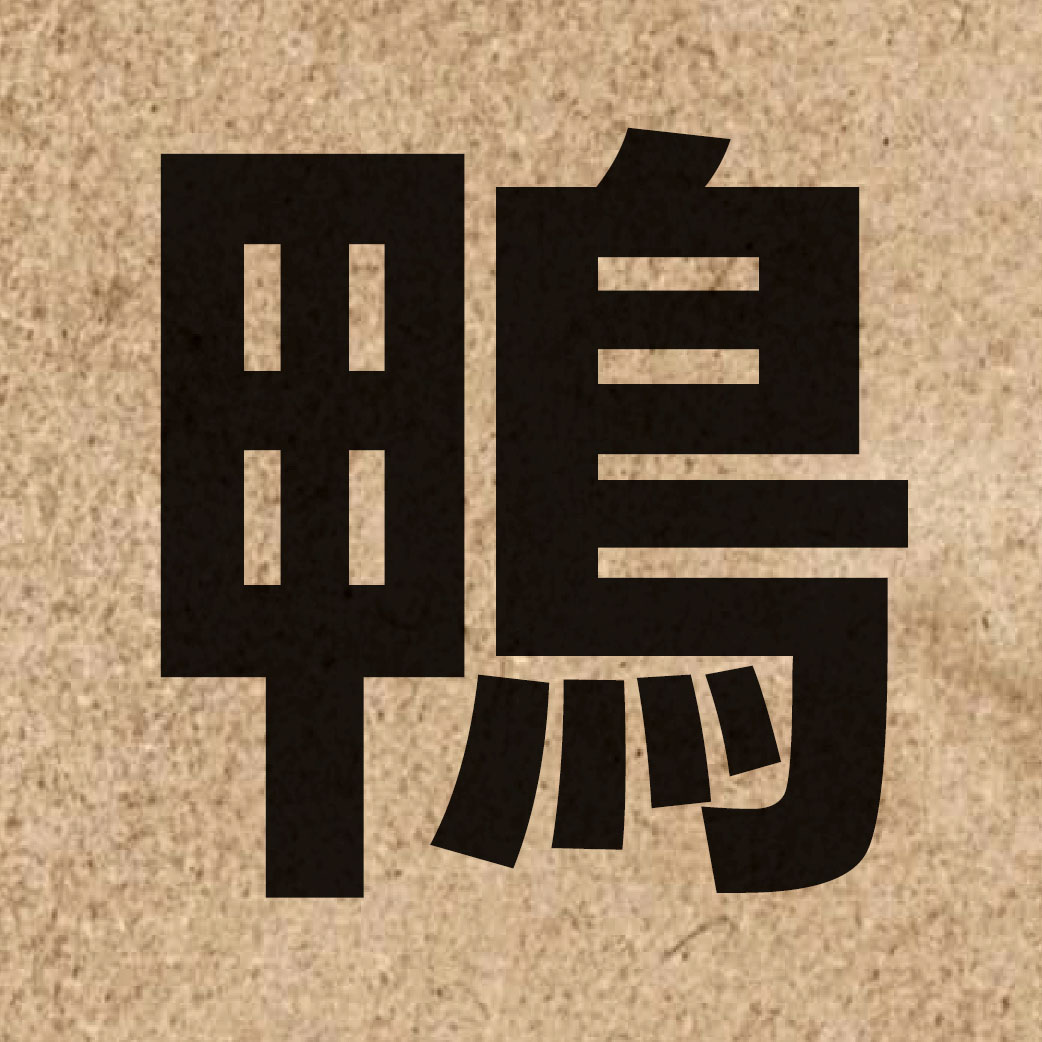
The Chinese word【鴨】that we will introduce this time is a word that describes organisms or food, and is mainly used for the following meanings: Animals…
View More 鴨: Describing organisms or food, which are used in daily life, more advanced Chinese characters (simple version of the dictionary)
No cost to learn Chinese! Let’s delve into the beauty of the idiom 「鵝行鴨步」 and how it’s used.
Progressing from characters to words and idioms marks advanced Chinese. This guide freely explains 「鵝行鴨步」 for your learning. Here, we present the idiom 「鵝行鴨步」. Below,…
View More No cost to learn Chinese! Let’s delve into the beauty of the idiom 「鵝行鴨步」 and how it’s used.
Explore Chinese idioms to strengthen your language skills. Today’s pick is: 「鴨行鵝步」.
Our free resources help you explore Chinese idioms and proverbs. These phrases are full of meaning and widely applicable. Today, we introduce 「鴨行鵝步」—details below. Today’s…
View More Explore Chinese idioms to strengthen your language skills. Today’s pick is: 「鴨行鵝步」.
Explore the definition and practical use of 「鴨步鵝行」, plus its Mandarin and Cantonese pronunciations.
Our goal is to provide you with free Chinese learning tools. This series highlights idioms and proverbs, full of meaning and adaptable to many contexts.…
View More Explore the definition and practical use of 「鴨步鵝行」, plus its Mandarin and Cantonese pronunciations.
Discover the meaning and how to use 「打鴨驚鴛」, along with Mandarin and Cantonese pinyin for reference.
Here’s a free resource for learning Chinese. This series focuses on idioms and proverbs, useful for various expressions. Today’s topic is 「打鴨驚鴛」, as shown below.…
View More Discover the meaning and how to use 「打鴨驚鴛」, along with Mandarin and Cantonese pinyin for reference.
Explore the definition and practical use of 「水過鴨背」, plus its Mandarin and Cantonese pronunciations.
Our free resources help you explore Chinese idioms and proverbs. These phrases are full of meaning and widely applicable. Today, we introduce 「水過鴨背」—details below. Learn…
View More Explore the definition and practical use of 「水過鴨背」, plus its Mandarin and Cantonese pronunciations.